Part One
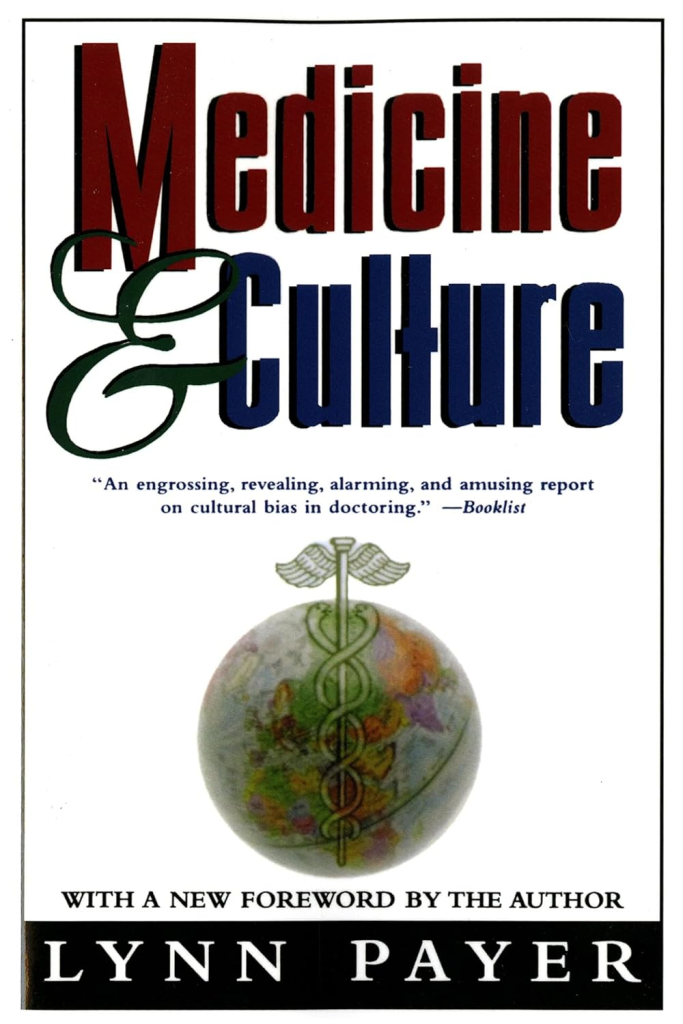
In her book Medicine & Culture (Figure 1) Lynn Payer studied styles of mainstream medicine in four countries which you might have assumed had more or less standardised their medical practice. A surprise to some, her study showed that in her area of research (Germany, France, England and America) modes of historical cultural thought influenced conceptions of disease and consequent diagnostic expression in the contemporary medicine of those countries. It so happens that these are four of the six countries in which I have lived and studied herbal medicine. Payer’s account came not so much a revelation to me as a confirmation of the cultural tendencies I thought I had observed during my travels both as an adult and a young person.
It is over fifty years since I first thought seriously about a change of career, and decided to become a herbalist, wanting to know how to cultivate medicinal plants and prescribe them in a clinical setting. Initial enquiries to the then Society of Herbalists and reading the flimsy pamphlets of the National Institute of Medical Herbalists seemed discouraging in a particularly British way, sending me off on travels to the Americas. Here I found untrammelled (and eclectic) enthusiasm on the West Coast of the USA.
Lawrence Durrell’s memoir of Ludo Chardenon (born 1915), the herbalist who treated him in Southern France was published in California when I was there (Durrell, 1973). By contrast I found an astringent biblical puritanism on the East Coast. I felt more at home in Mexico and Guatemala, triggered as much as anything by a respect I found there for the tactile and olfactory, for the psychodrama of life. It rekindled my memories of herb-sellers at markets in Southern France from earlier years.
As a child in the countryside, the smell of earth and the aroma of plants on the fringes of unsprayed English fields converged irrevocably in my olfactory imagination. I spent some months with a family in Occupied Germany (in the American sector) not long after the war. The culinary herbs in the rich vegetable stews and the varieties of breads and pulses allowed me to appreciate that there are good ways to live in austere times.
My first experience of working in France as a teenager exposed me to the vitality that emerges when culinary and medicinal plants are not considered as entirely separate. I did not know it then, but it was my Hippocratic awakening: one that was revitalised by an extended stay in Pays Basque where, aged 16, my understanding of the use of herbs in food and in medicine deepened. At the end of dinner each night the lady of the house would ask me to enquire of guests whether they would take coffee, a herbal liqueur or a tisane. Some years later, as a teacher of English, my first teaching post was in Ludo Chardenon’s département in Southern France, where I was treated successfully for crise de foie by a herbal infusion. In France, a rural culture of knowing, respecting and using simple medicinal plants has survived as a sustained tradition. For example herbalist Ludo Chardenon (1915-2000) collected his own plants in the wild, and effectively used plants to modify the terrain. (Bryce-Ytsma and Watkins, 2014; Chardenon, 1973, 1985).
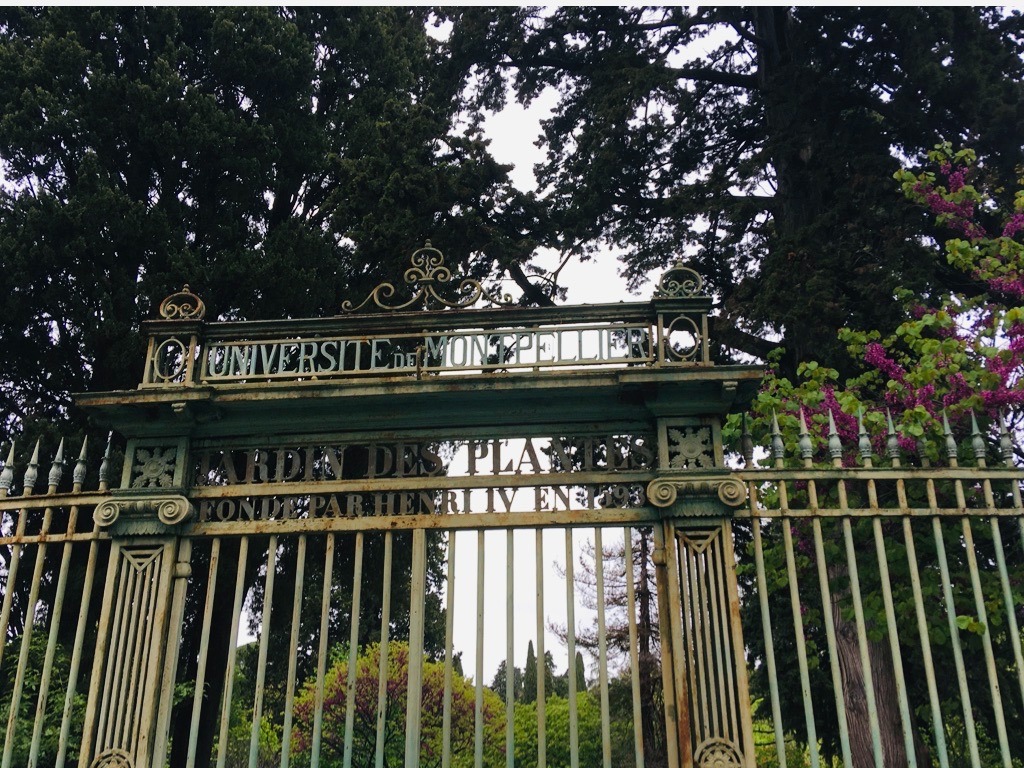
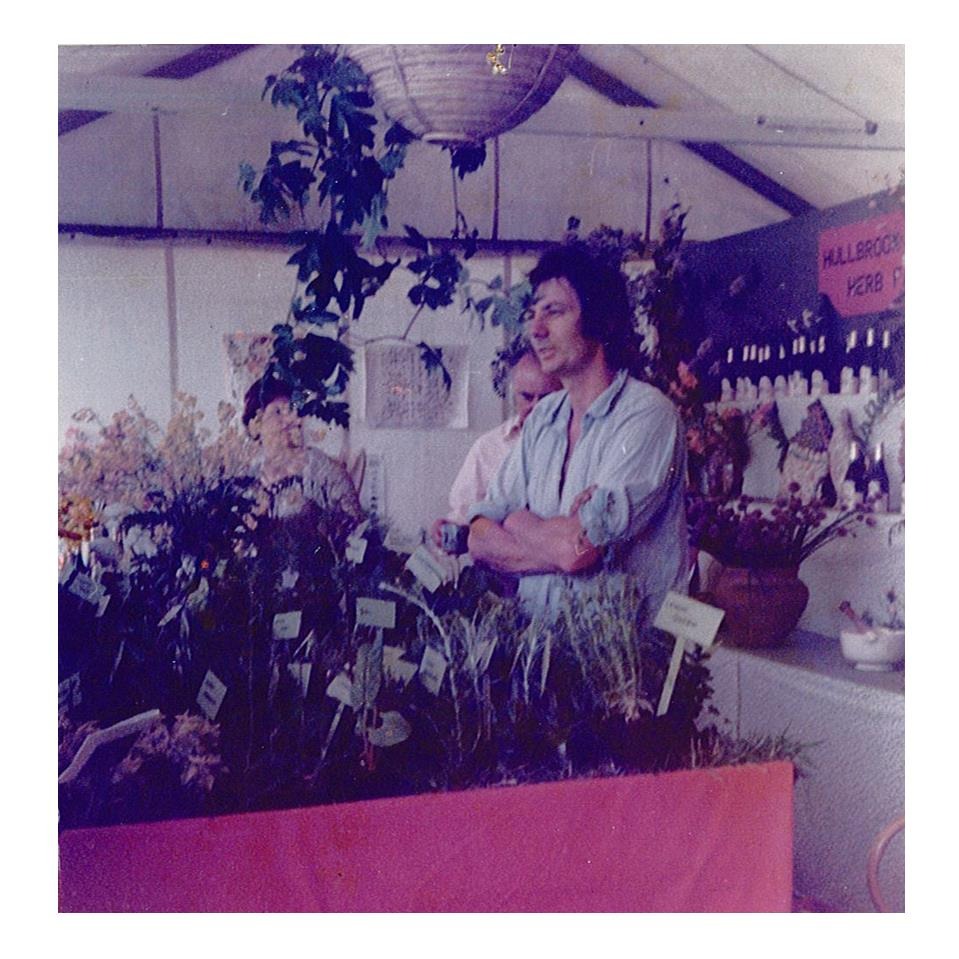
These experiences slumbered as I worked in other spheres for years and re-emerged when I came to study herbal medicine. Immediately before doing so however, I was commissioned to transport a lorry-load of fresh herbs for the restaurant trades back to London from Darégal in Milly-la-Forêt, south-east of Paris. This was then (and may still be) the largest grower of culinary herbs in the world. There I was able to gaze across 1500 acres of chives (see Figure 2). In a herboristerie nearby, I serendipitously discovered a surviving member of the last cohort of the herboristes diplomées dispensing herbs.
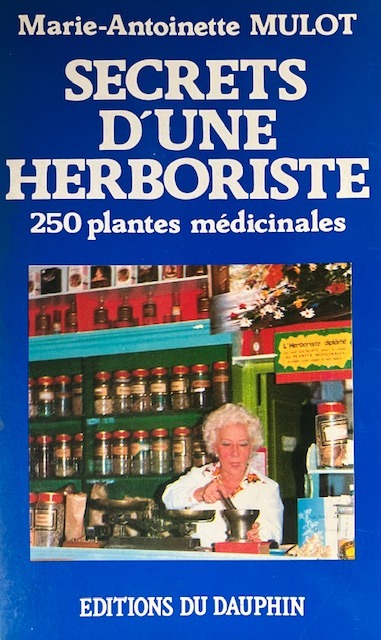
This métier had been disallowed in 1941 by the wartime Vichy government. (It is surely not by coincidence the House of Commons similarly passed into law “without due scrutiny” The Pharmacy & Medicines Act 1941, though this was effectively repealed in Britain by The Medicines Act 1968). However, all the laws enacted by the Vichy government were repealed save for this one thereby transferring the practice of herbal medicine exclusively to doctors or pharmacists, though surviving diplomées were permitted to continue dispensing. Marie-Antoinette Mulot (1919–1999), was born and died in the Camargues, trained at the Faculty of Pharmacy at Montpellier and was in the last cohort of herboristes diplomées (Figure 3).
Their survival till this day (especially in Paris and the Midi) attests to the cultural importance of the personal terrain in medicine as much as that of the terroir in viticulture. After all, Louis Pasteur (1822-1895) started his career with his studies on wine and Claude Bernard (1813-1878) initiated the concept of le milieu intérieur. The saying, “Le germe n’est rien, c’est le terrain qui est tout” is attributed to Pasteur on his deathbed and is simply translated as “The germs is nothing, the terrain is everything”.
With this background I enrolled at the School of Herbal Medicine. The director, Hein Zeylstra, continued with the predominately American materia medica of the Physiomedicalism that prevailed in Britain at the time, although he personally favoured and taught from German sources, notably Rudolf Fritz Weiss (1895–1991) and the German-Swiss pharmacognosist Hans Flück (1901-1985). I found these German authors—with their focus on indigenous European plants—very congenial and practical (see Figure 4).
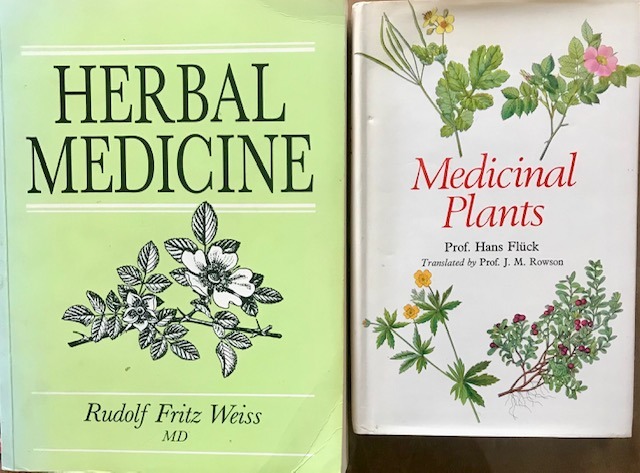
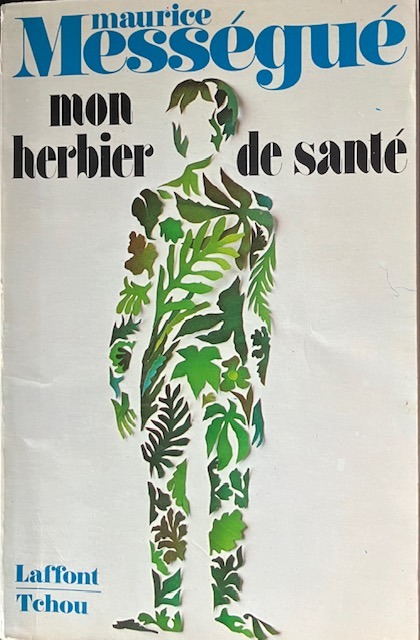
Tolerance of phytotherapists and naturopaths (heilpratikers) coexisted in Germany with an interest in the native medicinal flora. Weiss shared with Henri Leclerc a strong focus on clinical evidence. Thus I studied French phytotherapy texts though keeping my copies of popular French herbalists like Maurice Mésségué (1921–2017) (see Figure 5) and Jean Palaiseul (1912-2000) under the desk, in parallel with German phytotherapy texts and those of the Anglo-American Eclectic and Physiomedical tradition.
References
Bryce-Ytsma, Hanja and Watkins, Frances eds., (2014). Herbal Exchanges in celebration of the NIMH, 1864-2014 London: Strathmore.
Chardenon, Ludo, (1984). In Praise of Wild Herbs: Remedies & Recipes from Old Provence. London: Capra.
Durrell, Lawrence, (1973). The Plant Magic Man. Santa Barbara: Yes! Capra Chapbook 5.
Flück, Hans, (1941, English trans. 1976). Medicinal Plants and their Uses. London: W. Foulsham.
Mésségué, Maurice, (1978). Mon herbier de santé, Paris: éditions Laffont.
Mulot, Marie–Antoinette, (1984). Secrets d’une Herboriste. Paris: Editions du Dauphin.
Payer, Lynn, (1989). Medicine & Culture. London: Victor Gollancz.
Weiss, Rudolf, (1988). Herbal Medicine. Gothenburg: AB Arcanum and Beaconsfield: Beaconsfield Publishers. (English translation of Lehrbuch der Phytotherapie. (1960, 1974, 1982, 1985). Stuttgart: Hippokrates Verlag.
For the next installment please click on the link to read more about Julian’s journey after qualifying as a medical herbalist and suggested further reading.
Biography
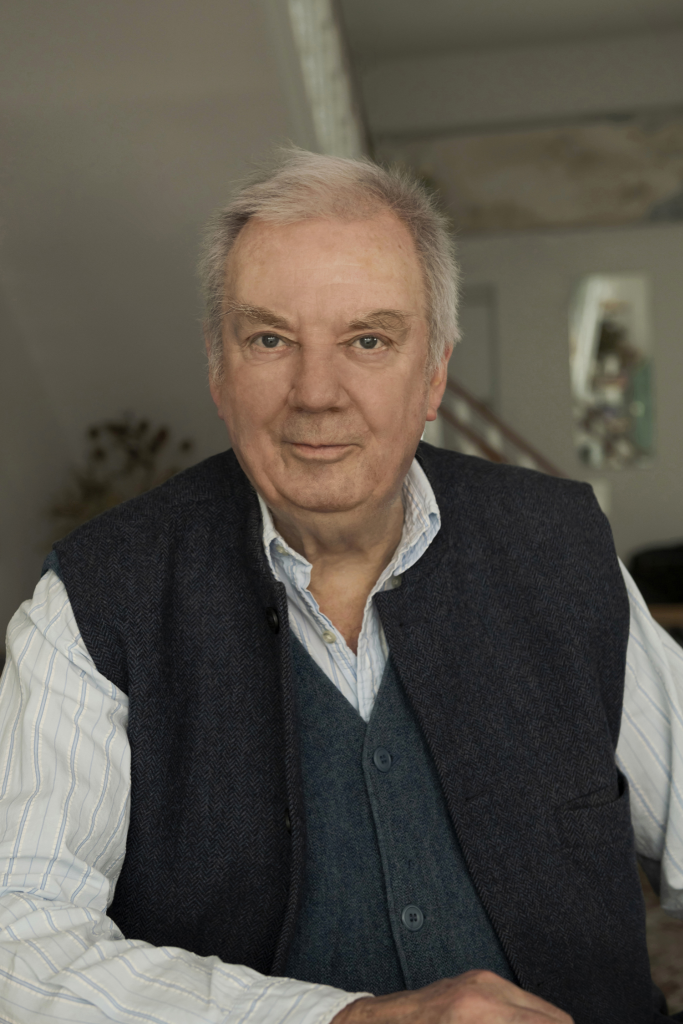
Julian Barker has been practising phytotherapy for more than four decades and is the author of The Medicinal Flora of Britain and Northwestern Europe (2001), Human Health and its Maintenance with the Aid of Medicinal Plants (2020) as well as several other books on herbal medicine and human health with the most recent being Plants on Prescription (2026).
If you have any questions regarding this article please email Julian direct