By Anne Stobart PhD, independent researcher and author
When I was young the concept of truth seemed so simple. Learning about history helped me to appreciate the many versions of reality that are possible. As technology evolves, artificial intelligence (AI) can affect what we consider to be truth and discovery in the field of herbal history research. Here I mull over some issues, from the potential for greater accessibility to challenges posed in interpreting the archives. I have been avoiding AI so far. Now I believe that we must face up to AI and encourage researchers to explore it and better understand its benefits and limitations.

Figure 1 My approach to artificial intelligence until now!
Truth not so easy to identify and preserve
I grew up in a time which revered ‘the truth and nothing but the truth’ so I thought it existed. Now I see many versions of the same events and widespread confusion about actual reality. Probably it has always been the case that truth is malleable, just not so blatantly managed as in today’s social media. In historical archives there are many significant gaps and no opportunities to fill them in, so historians have to carefully interpret the available sources in order to be ‘truthful’ in the context of the original texts. The ability to interpret well is complex, drawing on extensive experience, knowledge and understanding. Whether we like it or not we bring our own ideas into this process, and it is vital for researchers to be aware of the potential for both being misled and producing misleading results. The ability to avoid such errors and bias is part of the training that many historians undergo in academic programmes but otherwise may have to be developed unaided.
Archival practices and technology
In the field of social history, the gaps in sources are particularly evident and may be meaningful, women often being invisible in the records. Further practices in archival handling can rely on assumptions that lead to tragic loss of information. Somewhat selective sampling of past archives can give us rather distorted perceptions of what may have taken place. Indeed, archival silences can affect the understanding today of ethnobotanical practices as Claudia Ford has described (Ford, 2021). In ethnobotany there is concern about the lack of progress in recording material that could easily be lost. “The primary aim of ethnobiological research is now to document disappearing traditional knowledge. This is an absolute priority due to the rate at which biocultural biodiversity in the world is disappearing” (Łuczaj, 2023). With the help of digitisation there is potential to permanently record sources and make them more accessible. James Freeman wrote on this Herbal History Research Network blog back in 2023 about a project to digitise medieval recipes enabling greater search opportunities for researchers of medieval manuscripts in Cambridge. I see digitisation of archives as a great opportunity BUT this needs to be done in a way that both preserves the original raw material and optimises discovery. Even crossed out words or marginal additions are important in herbal remedy recipe research!
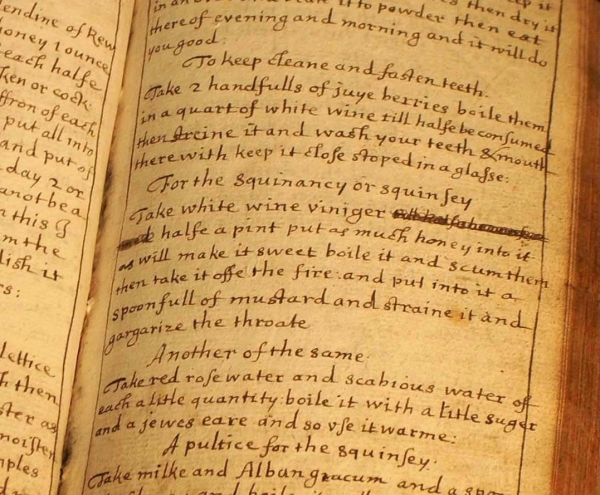
Figure 2 Digitisation of archives should include original images (extract from Pharmacopilium, Devon and Exeter Institution, UK).
Artificial intelligence challenges
AI tools can gather masses of information and recognise patterns, enabling some ever-increasing predictive ability. These tools may be useful in editing and proofreading, gathering and synthesizing information, providing additional suggestions and images. However, historians at the University of Cambridge have noted that AI “may take away opportunities to learn and demonstrate the key skills underpinning the construction of scholarship” (McPherson and Candea, 2024). Beyond the basic skills of research, a major problem arises in the interpretation of historical material. Gaps in understanding may be creatively filled in by AI tools. For example, the use of ChatGPT to interpret a document related to slavery reveals AI misunderstanding of a pass issued to a slave as representing ‘freedom’ rather than coercion and imprisonment (Stiers, 2023).
Such errors require human intervention to ensure accurate representation. From the American Historical Association, the view is that historians are essential to “act as subject matter experts, undertake extensive research, synthesize complex secondary literature, and look for biases, inaccuracies, and limitations” (AHA Ad Hoc Committee, 2025). The historical research community has increasingly clarified that disclosure of AI use should be mandatory for uses beyond checking spelling and grammar (Resnik and Hosseini, 2025).
Trying out AI for myself
I am not accustomed to using AI models although I have once participated in a seminar on their use in designing online courses. So, I am a beginner in this area. I wanted to see if the AI models available could offer anything in relation to drafting this blog post. Having thought through some points I wanted to cover I submitted a request to two AI interfaces accompanied by some past writing about herbal history. I gave the same request to ChatGPT and DeepSeek. You can see the prompt I used below. The same request produced markedly different results.
The DeepSeek response outlined the approach to the query, synthesised a blog post which referenced quotes from supplied texts, and created subheadings. The ChatGPT response was altogether wordier, a blog post that did not cite specific sources supplied but did list other unrelated sources. From this brief experience, in the future I would only consider using these AI models as tools for specific purposes, perhaps (a) DeepSeek for summarising large numbers of studies and (b) ChatGPT for generating advertising material. I did not want to use the AI responses for writing this blog post but I now feel more assured about the limits of what AI can offer.
To use these AI tools, you sign up for an account providing your email. Use is generally free though further features may be provided for a fee. Then you answer one or two questions about the nature of your request, and provide a ‘prompt’ detailing what is wanted. You can upload additional files of material. Note that uploaded information into AI platforms may be stored and used elsewhere. So your work could be re-issued or used without you being informed. If you do use AI tools then a disclosure statement is recommended. Your statement should specify the nature of use. For example, “I acknowledge the use of <insert AI name and URL> to generate information/ draft structure/ identify style improvements/ create images/.”
Figure 3 A representation of artificial intelligence (credit: freepik.com).
A way forward
So how can we ensure that our work continues to be truthful and valid? Clearly, historians still need to learn research skills, from search and synthesis to argument and attribution. Beyond this I believe we should cautiously become more familiar with how AI tools work. But, beware, never use AI-generated content without editing and checking as quotes and sources may be created that are misrepresentative or non-existent!
My views on AI are entirely personal and not necessarily those of other members of the Herbal History Research Network, though I hope that this brief overview will promote further understanding and more debate!
AI use disclosure
I acknowledge the use of Chat GPT and DeepSeek to generate draft posts to help increase my understanding of the present capabilities of AI.
This was my prompt to ChatGPT (https://chatgpt.com/) and DeepSeek (https://chat.deepseek.com/)
“I want you to help me write a blog post about ‘Truth and Discovery in Herbal History Research’ where I will review the nature of scholarly research including the important skills of collecting and organising historical information, skilful interpretation of the archival sources, and guidelines helpful to editing and reviewing research writing. I want to include positive examples of new sources and revised interpretation of existing archives as well as concerns about the digitization of archives and use of artificial intelligence in the academic discipline of history. I would like to encourage further research in herbal history. My blog post should be written in a scholarly manner and total about 1000 words in the text with up to 10 additional references. I attach some articles I have previously written in this field of enquiry.”
Additional files uploaded were my draft for the Conclusion published in Critical Appraisal book (Stobart and Francia, 2014), an unpublished conference paper on herbal history and medicine at the margins, and a draft article on guidelines for herbal history research reviews. Click for full AI responses. Please take a few moments to let us know what you think about AI models in relation to historical research.
References
AHA Ad Hoc Committee on AI in History Education in 2024–25. 2025. “Guiding principles for artificial intelligence in history education.” Accessed 26.02.2026. https://www.historians.org/resource/guiding-principles-for-artificial-intelligence-in-history-education/.
Ford C. 2021. “Researching ethnobotany in the archives: Authority and silences in the stories of Native and African American medicines.” Accessed 20.02.2026. https://www.herbalhistory.org/home/researching-ethnobotany-in-the-archives-authority-and-silences-in-the-stories-of-native-and-african-american-medicines/.
Freeman J. 2023. “Curious Cures in Cambridge Libraries: making medieval medical recipes accessible.” Accessed 26.02.2026. https://www.herbalhistory.org/home/curious_cures-in_cambridge_libraries/.
Łuczaj Ł. 2023. “Descriptive ethnobotanical studies are needed for the rescue operation of documenting traditional knowledge.” J Ethnobiol Ethnomed 19(1): 37. doi: 10.1186/s13002-023-00604-5.
McPherson E and Candea M. 2024. “AI and scholarship: A manifesto.” Accessed 20.02.2026. https://www.cam.ac.uk/stories/ai-and-scholarship-manifesto.
Resnik DB and Hosseini M. 2026. “Disclosing artificial intelligence use in scientific research and publication: When should disclosure be mandatory, optional, or unnecessary?” Accountability in Research 33(2): 2481949. doi: 10.1080/08989621.2025.2481949.
Stiers, C. 2023. “Assessing the usefulness of ChatGPT in crafting interpretive content.” Accessed 20.02.2026. https://ncph.org/history-at-work/assessing-the-usefulness-of-chatgpt-in-crafting-interpretive-content/.
Stobart A and Francia S. 2014. Critical approaches to the history of Western herbal medicine. Bloomsbury Academic. Accessed 28.04.2026. https://archive.org/details/oapen-20.500.12657-61922
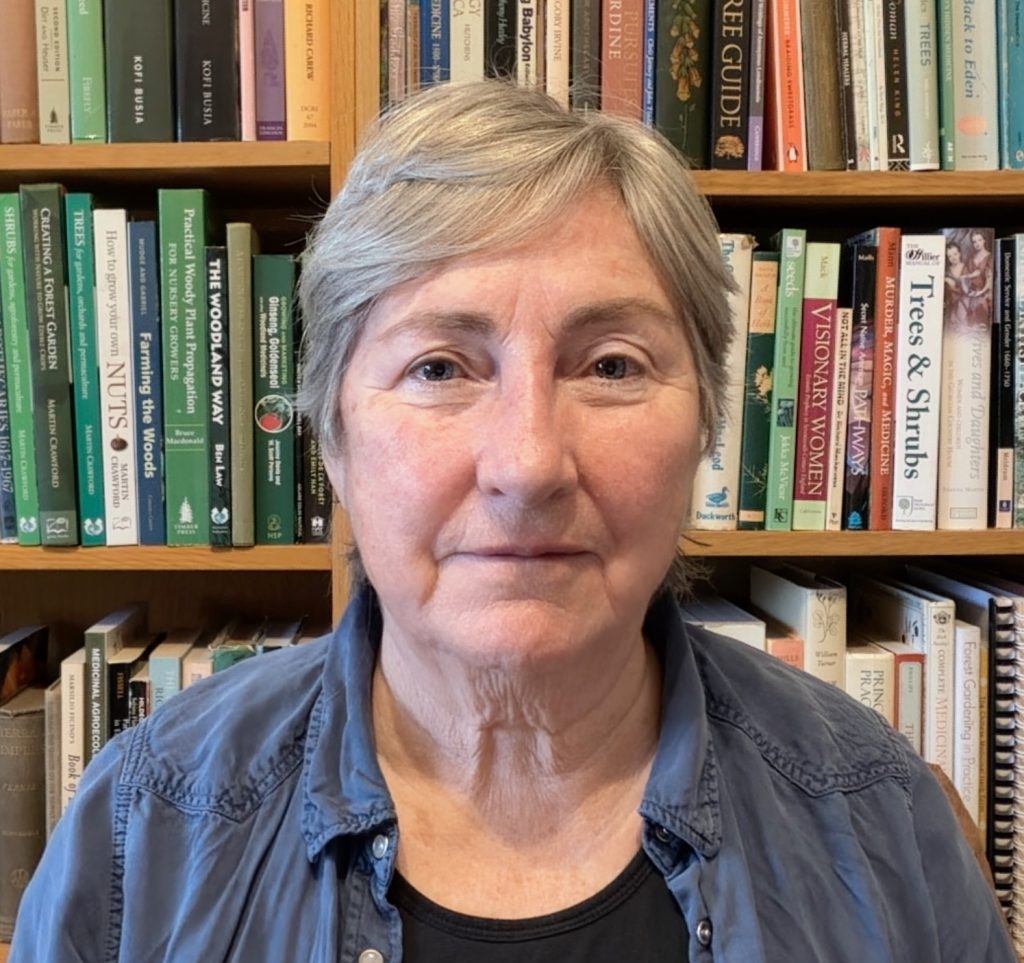
Biography
Anne completed her training as a professional medical herbalist with the School of Herbal Medicine in 1993, and worked in clinical practice in Devon, UK, until 2018. Anne was Director of Programmes for Complementary Health Sciences, at Middlesex University, where she completed her PhD in the history of medicine. She co-edited Critical Approaches to the History of Western Herbal Medicine (Bloomsbury, 2014) and has published some of her historical research in Household Medicine in Seventeenth-Century England (Bloomsbury, 2016). Anne also has research interests in permaculture design and the sustainable cultivation and harvest of medicinal plants. Currently she is developing the Medicinal Forest Garden Trust and online courses related to permaculture design with medicinal trees.