We are currently suffering the worst pandemic in over 100 years. In the last such event, the great influenza pandemic of 1918-19, modern medicine was in its relative infancy and some resorted to herbal treatments as frontline therapy. The best documented example was the Eclectic physicians in the United States (Haller, 1994). Eclectic medicine made use of non-invasive therapies and healing practices (especially herbs) and was popular in the latter half of the 19th and early 20th centuries. We are indeed fortunate that some modern scholars have researched and written about how this group of early alternative practitioners managed the challenge of a virulent infection.
The Eclectics mainly used herbal preparations and in 2006, Abascal and Yarnell published their prescient article entitled Herbal treatments for pandemic influenza: learning from the Eclectics experience. Kathy Abascal also published her book on this topic in the same year (Abascal, 2006), which has since been renamed and revised to reflect the current COVID-19 pandemic (Abascal, 2020).
Fever management was critical
Abascal and Yarnell (2006) noted that the Eclectics claimed good success for pandemic influenza, with a fatality rate of 0.6% compared to the typical rate of around 3%. Fever management was a significant part of their approach, with several of the lead herbs being diaphoretics. Featured in the journal article are gelsemium, Gelsemium sempervirens (L.) J. St-Hil., black cohosh, Actaea racemosa L, boneset, Eupatorium perfoliatum L. and pleurisy root, Asclepias tuberosa L. The last two are noted diaphoretics, and all of these herbs were used in fever management. It is of interest, the Eclectics used black cohosh quite differently to its modern use by herbal clinical practitioners for menopausal symptoms.
Abascal and Yarnell elaborate as follows:
One physician reported treating 200 cases of influenza successfully during the 1918 pandemic, using a combination of gelsemium, black cohosh, Euphrasia officinalis (eyebright). He estimated that 75 per cent of all influenza cases could be handled with these three herbs alone.
p. 217.
A significant, but anonymous, Eclectic journal entry cited in the article was:
With boneset and gelsemium almost the whole range of symptoms of influenza may safely be brought under control…
p. 215.
Interestingly, Abascal and Yarnell also quote another anonymous journal entry, where boneset was the major ingredient in a preventative remedy:
In a well-known manufacturing establishment five employees were recently stricken in one day with ‘Spanish influenza’. Immediately a prescription of this remedy was compounded and a bottle given to every member in the establishment, with directions to take one teaspoon every two hours the first day, afterward three times daily. Since that date not one member of the establishment has been afflicted…
p. 216.
Additional herbs used
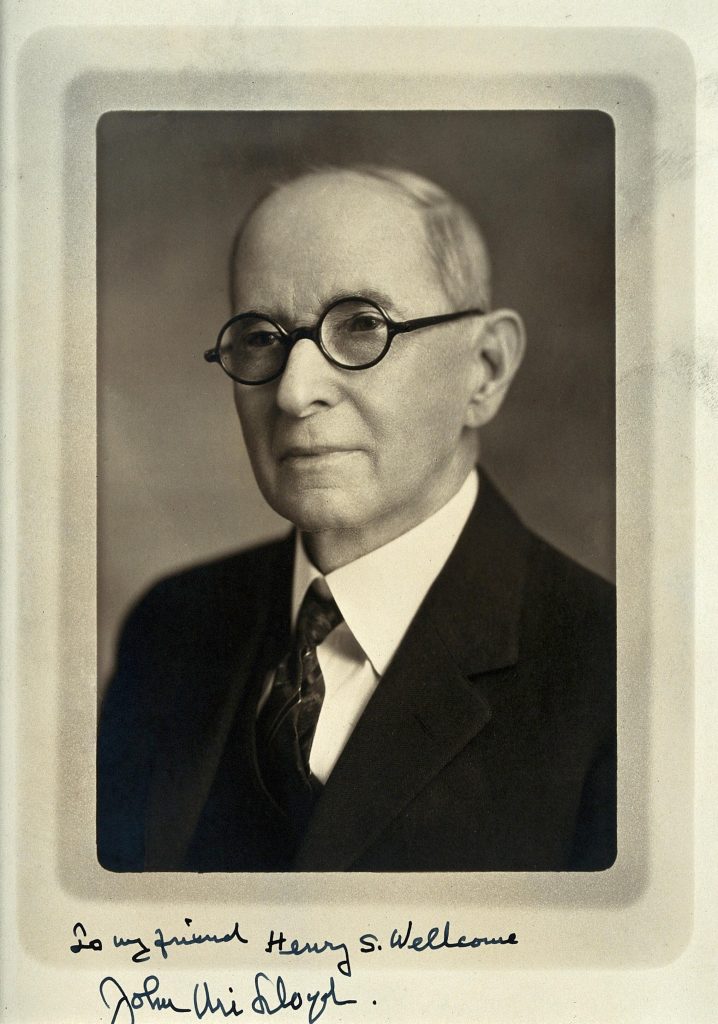
When reviewing Kathy Abascal’s 2006 book, Francis Brinker (2007) added new information using a March 1919 summary list generated by the herbal company Lloyd Brothers from answers by 1000 Eclectic physicians regarding their top herbal remedies for influenza and pneumonia.
Table 1 Results of survey of 1000 Eclectic physicians, compiled by Lloyd Brothers in March 1919.
| Name | Endorsement for influenza | For pneumonia |
| Aconite, Aconitum napellus L. * | 788 | 617 |
| Gelsemium, Gelsemium sempervirens (L.) J. St-Hil. * | 722 | 293 |
| Briony, Bryonia alba L. * | 707 | 723 |
| Black cohosh, Actaea racemosa L. | 384 | 0 |
| False hellebore, Veratrum viride Aiton * | 353 | 576 |
| Boneset, Eupatorium perfoliatum L. | 328 | 0 |
| Lobelia, Lobelia inflata L. * | 324 | 468 |
| Pleurisy root, Asclepias tuberosa L. | 268 | 366 |
| Deadly nightshade, Atropa belladonna L. * | 0 | 169 |
| Ipecac, Cephaelis ipecacuanha (Brotero) Andersson * | 236 | 411 |
| Blood root, Sanguinaria canadensis L. | 0 | 134 |
Hence, the additional influenza pandemic treatments from this survey were aconite, briony, false hellebore, lobelia and ipecac. These are all potentially toxic and therapeutically robust herbs. Today, depending on the legal requirements in different jurisdictions, all the herbs asterisked (Table 1) are either banned or restricted to prescribing by qualified herbal practitioners – and are certainly unsuitable for self-prescribing.
Echinacea and sepsis
An apparent paradox of the Eclectic surveys and writings about the pandemic is the scant mention of echinacea root, Echinacea angustifolia, given it was well-noted by Eclectic writers for a range of infections. This is even more remarkable because an inventory by Lloyd Brothers in 1920, shortly after the pandemic, found echinacea root was by far the most popularly purchased herb overall, with black cohosh a very distant second (Lloyd, 1923). However, a more careful analysis does reveal that echinacea probably played a key role for managing some of the more serious clinical manifestations of influenza infection during the pandemic.
Severe influenza infection can cause a phenomenon known as cytokine storm (Abascal and Yarnell, 2006). This was well recognised in the era of the Eclectics as a state known as sepsis, and the descriptor is still valid today in this context. Echinacea root was the key Eclectic treatment for sepsis, as reflected in the writings of Ellingwood (1919). For example, he wrote:
It is the remedy for blood poisoning, if there is one in the Materia Medica. Its field covers actual auto-infection, slow progressive blood taints, faults of the blood from imperfect elimination of all possible character, and from the development of disease germs within the blood. It acts equally well, whether the profound influence be exerted upon the nervous system, as in puerperal sepsis and uremia… In pleuritis, in bronchitis, in peritonitis, especially pelvic peritonitis from sepsis…
p. 183.
Conclusion
As the above brief outline suggests, past experience may give indications of the therapeutic approaches that herbal practitioners could consider today. There are several insights from the Eclectic experience that could be relevant to the current pandemic, even though the virus involved is quite different.
References
Abascal, K., (2006). Herbs & influenza: how herbs used in the 1918 flu pandemic can be effective today. Vashon, WA: Tigana Press.
Abascal, K., (2020). Herbs and influenza: how herbs used in the 1918 flu pandemic can be effective in ANY pandemic, 2nd ed. Vashon, WA: Tigana Press.
Abascal, K. and Yarnell, E., (2006). Herbal treatments for pandemic influenza: learning from the Eclectics’ experience. Alternative and Complementary Therapies, 12(5), pp. 214-221. [online] Available at: https://www.liebertpub.com/doi/10.1089/act.2006.12.214 [Accessed 14 July 2021].
Brinker, F., (2007). Book review of: Herbs & Influenza: how herbs used in the 1918 Flu Pandemic can be effective today. HerbalGram, 75, pp. 69-70. [online] Available at: https://www.herbalgram.org/resources/herbalgram/issues/75/table-of-contents/article3153/ [Accessed 14 July 2021].
Ellingwood, F. (1919). American Materia Medica, therapeutics and pharmacognosy. Version published by Southwest School of Botanical Medicine, Bizbee, AZ., pp. 179-192. [online] Available at: https://www.theforagerspath.com/wp-content/uploads/2019/12/1919-Ellingwood-American-Materia-Medica-Therapeutics-Pharmacognosy.pdf [Accessed 4 July 2021].
Haller, J.S., (1994). Medical protestants: the Eclectics in American medicine, 1825-1939. Carbondale, IL: Southern Illinois University Press.
Lloyd, J.U., (1923). Echinacea angustifolia. Lloyd Brothers, Cincinnati. In: R. Bauer and H. Wagner. eds. (1990). Echinacea: Handbuch für Ärzte, Apotheker und andere Naturwissenschaftler. Stuttgart: WVG., p. 16.
Biography
Professor Kerry Bone is a herbal industry leader, directing the research program at MediHerb. He is co-author of more than 40 scientific papers on herbal research and seven professional textbooks. He lives and works in Warwick, Queensland, Australia.