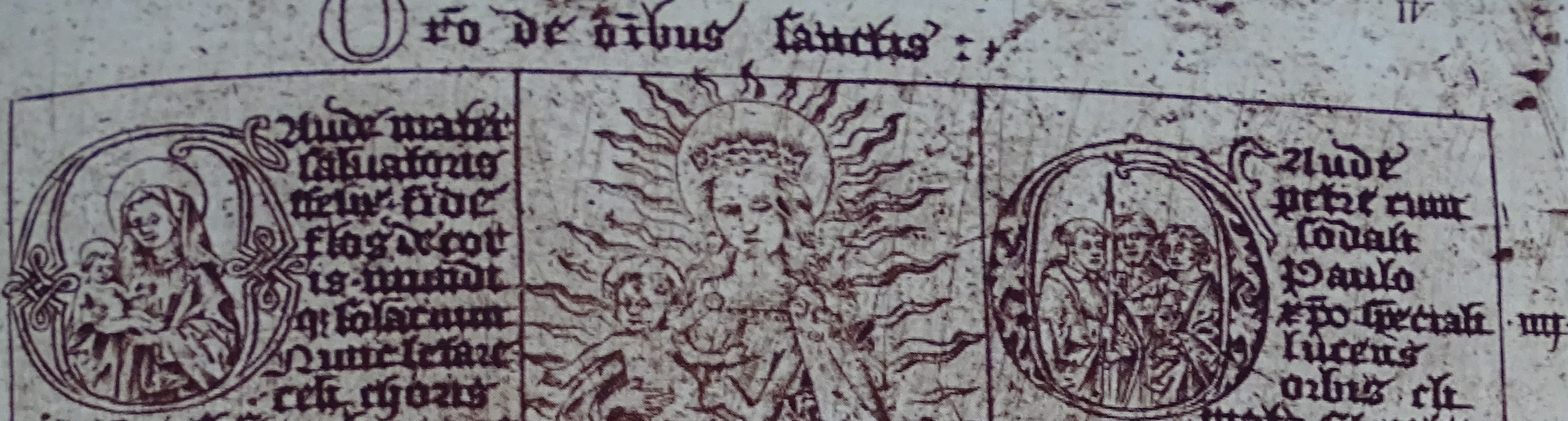
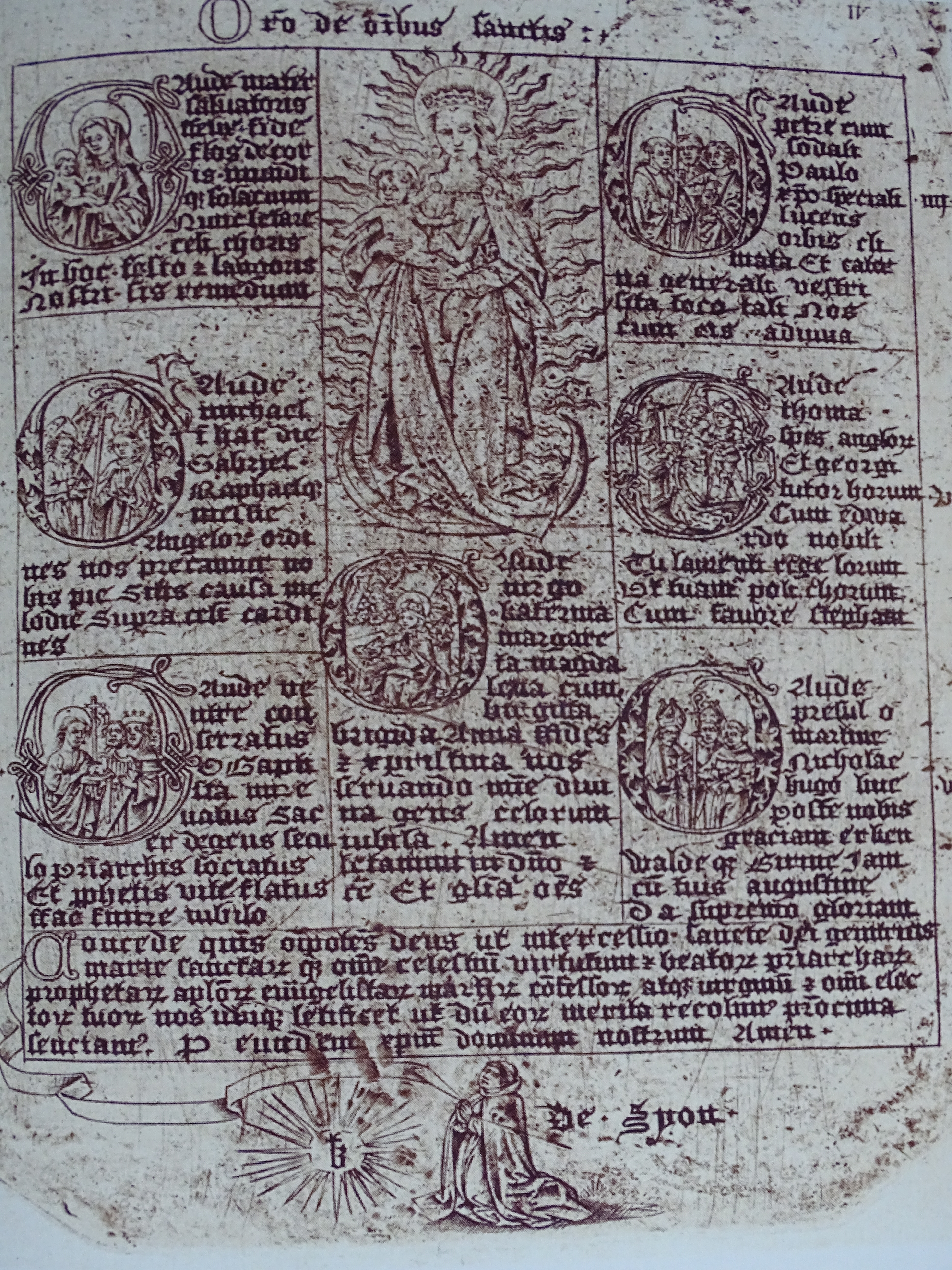
By John Adams, Syon Abbey Research Associates and joint author, The Syon Abbey Herbal
John’s full length article about the Herbal is available as a PDF to download here.
In about 2013 I became involved with a group of researchers and archaeologists looking into the history of Syon Abbey in west London, now under Syon House at Brentford. This was the only Bridgettine foundation in Britain – one of 40 in Europe, the last great flowering of the monastic movement before the Reformation. Syon was a double foundation of 65 nuns and 20 brother-priests, all answerable to the Abbess, and following the teachings of St Bridget of Sweden. It had perhaps the best monastic library in Europe, with over 10,000 titles.
The librarian’s catalogue of Syon books is still extant, and reveals considerable attention to herbal medicine, with five manuscripts in English (unusual for the period), and expensive printed herbals from Italy.
The medical notebook of Thomas Betson
A brother-priest, Thomas Betson, was responsible for the library and its catalogue from perhaps 1480 to his death in 1517.
Betson also had a notebook, in the middle of which he had entered a list of herbs with their Latin and English names, and numerous remedies, drawn from a variety of sources. He noted for example treatments for poor eyesight, shingles and female complaints, including breast cancer.
This was the last mediaeval herbal written in a monastery in Britain before the Dissolution of 1539. This was a key insight and provided us with the motivation to transcribe it and bring it into print.
We called on another group of allies to assist: palaeographers in our circuit. They kindly proof-read the text, and deciphered sections of Betson’s deteriorating handwriting. My colleague and co-author, Stuart Forbes, who is a trained palaeographer was invaluable here. He said that the key is to read and re-read the original text – one’s first reaction to a new text is always despair, but eventually the words and characters slowly swim into sight. I recall ‘wheelbarrow’ being particularly unexpected and taxing to decipher, at least for me.
We slowly realised that there are several major problems facing the researcher into mediaeval herbals in England. These may be conveniently broken down into culture, language and medical beliefs. Alchemy, astrology, bloodletting and the study of urine were also among the unexpected diagnostic and therapeutic tools.
Middle English
Apart from the difficulties of Middle English grammar and vocabulary, some texts carry dialect words and structures. Betson had originally been a parish priest in Essex, and his written English seems to have carried that imprint.
A useful tool here is A Linguistic Atlas of Late Mediaeval English (eLALME) (University of Edinburgh) which is available online: here
This allows for analysis and detection of these patterns in late Middle English, and which satisfyingly places Betson in Billericay. Care must however be exercised – Betson copied a MS from the Sussex-Kent border (BL MS 3285) while retaining its local linguistic features. But here again eLALME can be useful in indicating another regional voice in a manuscript.
Plant names
The mediaeval universities tended to teach medicine from the classical texts, mainly from the Latin, though with some translations of the Greek texts via Arab sources. Facility in Classical Greek language ability only came in late, around at the end of the 1400s. The Greek and Latin names of plants and medical terms had in some cases been corrupted over time. Similarly, valiant but futile efforts were made to identify plants of a northern clime with the names of those growing in the Mediterranean. There was also a hiatus with Old English sources and names when Norman French (with Latin) became the official language of medicine and law in England after the Conquest. The result was confusion of names and identification. Our current Linnaean standard plant categorisation was still several centuries away.
The main useful guide to Latin and Greek plant-names is:
Mwat, J. L. G., (1882). Sinonoma Bartholomaei & Synonyma Antidotarii Nicholai. Oxford: Clarendon Press. There is an online version, but it is hopelessly corrupt because of the inability of the OCR (optical character recognition) to recognise Greek and Latin names. The best option is to find a library copy. It is inordinately expensive to buy, at about £100.
See also the UK University catalogues at Library Hub Discover
Typing Mowat 1882 finds copies at various universities, the Wellcome Library and the British Library.
A further useful guide to the plants used by Latin and Greek authors is to be found in:
Thorndike, L., (1946). The Herbal of Rufinus, from the unique manuscript. Chicago, Illinois, University of Chicago Press.
Rufinus compared the curative powers of each plant according to the state of knowledge available to him in the late 13th century. These sources included Hippocrates (d. 370 BC), Dioscorides (d. AD 90) and Galen (d. 210 AD); Macer Floridus (French, 11th century), Copho and the Circa Instans (also both 11th century), and Avicenna (Persian, d.1037) Rufinus thus allows a comparative overview of plant names and powers, without the need to go to the individual texts and authors.
Another useful guide is:
Hunt, T., (1989). Plant names of Medieval England. Cambridge: Brewer. This comprehensive glossary allows fairly certain identification of plant-names in texts.
There are also several good websites for the Old English and Middle English plant names:
The best is the Dictionary of Old English plant names, for which you need to register, at:
The University of Michigan also has a Middle English Dictionary, which gives citations of plant-names and their various spellings – again a useful adjunct when spelling, like names, had not yet stabilised. There are, by way of example, 11 quotations for Comfrey, ‘Symphytum officinale’, with several recipes for its use, and variant spellings.
[Note from the Editor. Readers will note that both spellings of the word, “mediaeval” and “medieval” appear in this blog. The first with “ae” from the author and the second without the “a” in book and link titles. The history behind the difference is interesting. The word Mediaeval appears first in 1817, having evolved from the Latin medium aevum and referring to the Middle Ages as this period had previously been known. Perhaps in deference to the growing use of the typewriter which did not have a key for æ the new spelling of medieval first appeared in 1876. Either spelling has been used since then with a growing prevalence of medieval, however the choice remains a matter of preference.]
Bibliography
The following publication gives a comprehensive bibliography with details of the Herbal MSS and more detail on the Syon Abbey Herbal.
Adams, J. S. (2015). Syon Abbey: Its Herbal, Medical Books and Care of the Sick: Healthcare in a Mixed Mediaeval Monastery.
Also available on request from: j.s.adams@amcd.co.uk
Adams, J.S. and Forbes, S. (2015). The Syon Abbey Herbal AD 1517. London: AMCD (Publishers): London.
Adams, J.S. (May 2020). A Bibliography of Syon Abbey, Isleworth, with Some Sources for the Early History of Syon House.
Adams, J.S. (2013-2020). A List of Extant Printed Books and Manuscripts from Syon Abbey with their Current Location & Printed Books by, or Attributed to, Syon Authors, with a Short Bibliography.
Forbes, S. and Adams, J. S. (2020). The 1539 Syon Abbey Dissolution Inventories: TNA LR 2/112 & TNA E 117/11/58 with BODLEIAN MS Add. E. 3 (R): Transcriptions and Commentary.