
Written by Siobhán Barrett
Over 100 Irish-language medical manuscripts, dating from the 14th to the 17th centuries, survive in various libraries in Ireland, Scotland and England (Nic Dhonnchadha, 1999). These sources contain a wide variety of different medical texts, including theoretical material, aphorisms, collections of remedies, glossaries and quid pro quos. Some scholars working in the mid-twentieth century suggested that the Irish physicians abandoned all traditional learning and that their manuscripts contain nothing except translations of what was taught in the Southern-European medical centres (Shaw, 1952, pp. 12–13). More recent research has, however, shown evidence of adaptation of the source material and incorporation of native material to suit the needs of Irish practitioners.
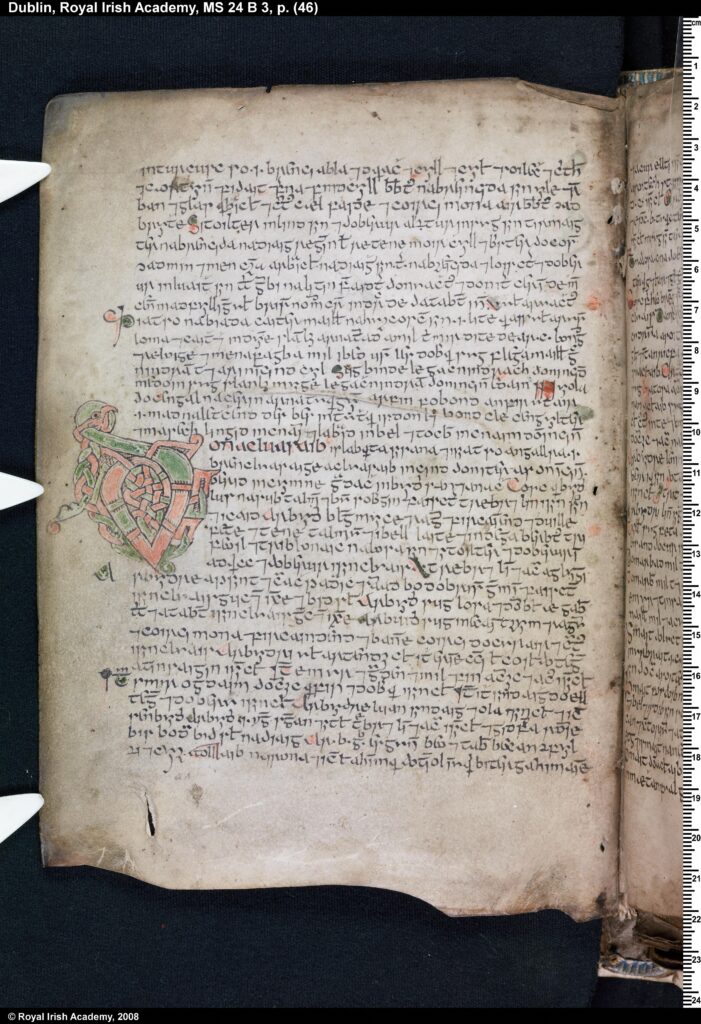
Figure 1. [Remedy collection], Royal Irish Academy Manuscript 445 (24 B 3) p.46. Permission courtesy of Irish Script on Screen [https://www.isos.dias.ie/]
An eye salve
These kinds of innovations are seen in a remedy collection (Figure 1) that was compiled in the sixteenth century by Connla Mac an Leagha, a physician of the Mac Diarmada lords in the medieval kingdom of Magh Luirg (Moylurg) in Roscommon in the west of Ireland (Walsh, 1947, pp. 214–17). This substantial work contains about 920 remedies, charms and prayers, in head-to-toe order, most of which follow the same format, and often cite the same ingredients, as remedies found in other European vernaculars. The collection also contains over 40 metrical passages, most of which are versified remedies (Hayden, 2018). The compiler, Connla Mac an Leagha, mentions many of the usual authors for example, Galen and Diascorides (sic), but equally acknowledges Irish authorities (Hayden, 2019). One of these is Dían Cécht, the physician of the supernatural race known as the Túatha Dé Danann and another is an historical figure, the King of Dál nAraidi. This eye salve (Figures 2 and 3) is associated with him:
Fobairt rig dāl n-araidi.i. edursnam glas uindsend ⁊ soilech brister ⁊fascther tre brét ⁊ curtur mil tana air ⁊ salann ⁊ do berar fiuchad ⁊ curtur fon sūil ⁊ īcaid (Royal Irish Academy (RIA) MS 445( 24 B 3) p.52, 4–6)
The king of Dál nAraidi’s salve i.e. green inner bark of ash and willow to be broken and strained though a cloth and thin honey and salt are put on it and bring to the boil and put on the eye and it heals. (My translation)
The king of Dál nAraidi referred to must be Congal Cáech (‘Congal the one-eyed’). He earned this epithet because he lost the sight of one eye following a bee sting. Accounts of this incident occur in historical and saga literature suggesting that compilers were incorporating native material into medical texts to suit an Irish audience (Barrett, 2019).

Figure 2. The King of Dál nAraidi’s salve in Royal Irish Academy Manuscript 445 (24 B 3) p.52. Permission courtesy of Irish Script on Screen [https://www.isos.dias.ie/]
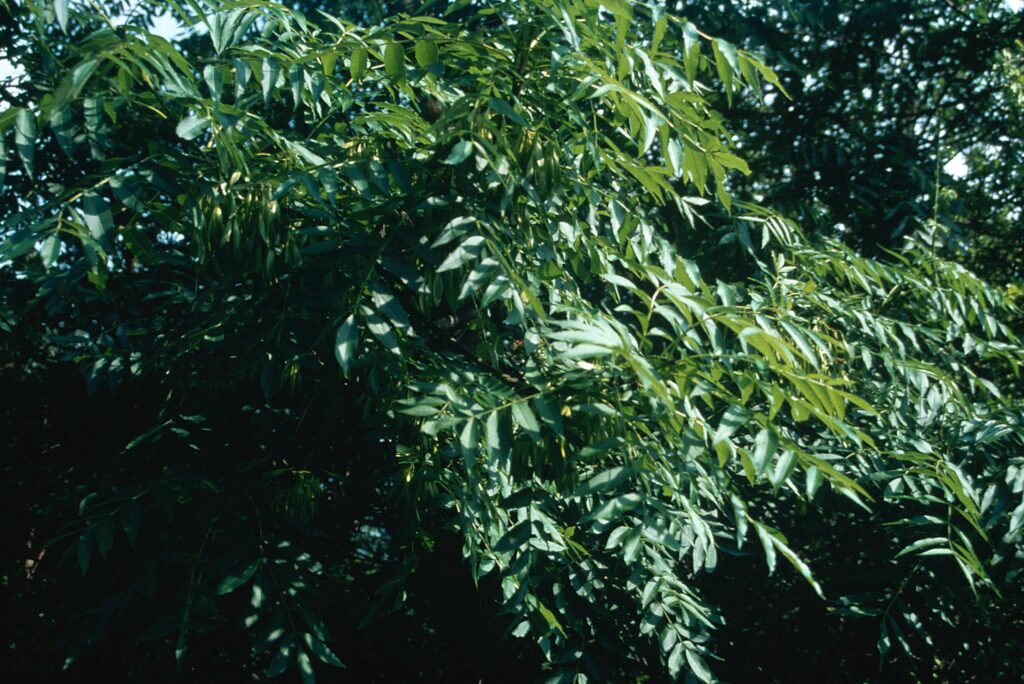
Figure 3. Fraxinus excelsior L. (Ash). Rowan McOnegal. Attribution-NonCommercial 4.0 International (CC BY-NC 4.0). Wellcome Images Online [https://wellcomecollection.org/works/zs8kbb5r]
Identifying plants
While there are some modern editions and translations of Irish medical texts the herbals have, to a large extent, been ignored. Identifying ingredients, particularly the plant names, can be difficult. Most of the entries in the online historical dictionary of the Irish language eDIL [http://www.dil.ie/], are derived from edited literary and legal texts meaning that the medical terminology is underrepresented. One such problematic plant is found with various spellings, iniga, inniga, indigha, and is translated as ‘the name of some plant’ (eDIL s.v. iníga). This plant name appears in many remedies including the metrical ones.
One example is found in a stanza from a poetic remedy for headache:
Lūait uinnsend a ngemrid garg
odrad inniga imard
do mēt na losa – cōir cain –
īcaith gach aon rē naomaid. (RIA 445 (24 B 3) p.44, 27–28)
Ashes of an ash tree in harsh winter
very tall bugloss, ?
an equal measure of the herbs – proper and fine –
It cures everyone within nine days. (My translation)
Another example of this word is found in a prose recipe for a poultice to cure headache. Here inniga is glossed, ‘inniga .i. glasair lena (RIA 445 (24 B 3) p.44, 3–7). The Modern Irish word glasair léana bheag (bheag meaning little) is used for ‘lesser spearwort’ Ranunculus flammula L. However, we cannot automatically assume that the Modern Irish name referred to the same plant in the 16th century. I have found an occurrence of flammula .i. an innechadh (National Library of Ireland Manuscript G11, 71a35) but perhaps this is a different word. There are also entries that equate Flamula with uibill uisci (literally ‘flame of water’) (National Library of Ireland Manuscript G11 p. 99b, 42). More examples of this word and the context in which it is found need to be examined to move towards a better understanding of this and many other Irish plant names.
My present work is the transcription and translation of previously unedited medical glossaries, lists of Latin headwords with their Irish equivalent. In comparison to the work that has been done on medieval English glossaries (Hunt, 1989) little has been done on Irish ones. The Latin headwords in the glossaries can usefully be compared to other medieval vernacular texts from neighbouring regions. However, more of the Irish medical material needs to be edited to usefully do this. This work should be of interest to herbalists and scholars with regard to language, botanical and medical history.
References
Barrett, S., (2019). The king of Dál nAraidi’s salve. Ériu, 69, pp. 171–8. [online] Available at: https://mural.maynoothuniversity.ie/13466/ [Accessed 6 January 2022].
Hayden, D., (2018). Three versified medical recipes invoking Dían Cécht. In: A. Ahlqvist and P. O’Neill eds. Fír Fesso: A festschrift for Neil McLeod. Sydney Series in Celtic Studies 17, Sydney, University of Sydney 2018, pp.107–123.
Hayden, D., (2019). Attribution and authority in a medieval Irish medical compendium. Studia Hibernica, 45, pp. 19–51. [online] Available at: https://mural.maynoothuniversity.ie/14954/ [Accessed 6 January 2022].
Hunt, T., (1989). Plant names of medieval England. Cambridge: D.S. Brewer.
Nic Dhonnchadha, A., (1999). Medical writing in Irish. In: J.B. Lyons ed. 2000 years Irish medicine. Dublin, Eireann Healthcare Publications. pp. 21–6.
Shaw, F., (1952). Medicine in Ireland in medieval times. In: W. Doolin & O. Fitzgerald eds. What’s past is prologue: a retrospective of Irish medicine. Dublin, Monument Press. pp. 10–14.
Walsh, P., (1947). An Irish medical family—Mac an Leagha. In: C. Ó Lochlainn ed. Irish men of learning. Dublin, Sign of the Three Candles. pp. 206–18.
Biography
Siobhán is a post-doctoral researcher in Maynooth University, Ireland. Her interests lie in medieval Irish medical texts, herbal remedies, plant names and glossaries. https://www.maynoothuniversity.ie/faculty-arts-celtic-studies-philosophy/our-people/siobh-n-barrett#1