
By Jane Borodale, Author and PhD candidate, Goldsmiths, University of London.
Jane’s novel The Knot is published by HarperCollins (2012). Her first novel The Book of Fires was shortlisted for the Orange Award for New Writers. She was Leverhulme Trust writer-in-residence at the Weald and Downland Museum in Sussex, and is currently studying towards a PhD at Goldsmiths, University of London. www.janeborodale.co.uk/
Introduction and Background
It is so often the gaps in history that intrigue us. The forgotten, the half-remembered; the dark shadowy spaces between triangulation points of irrefutable evidence or material scraps, which might be all we have left.
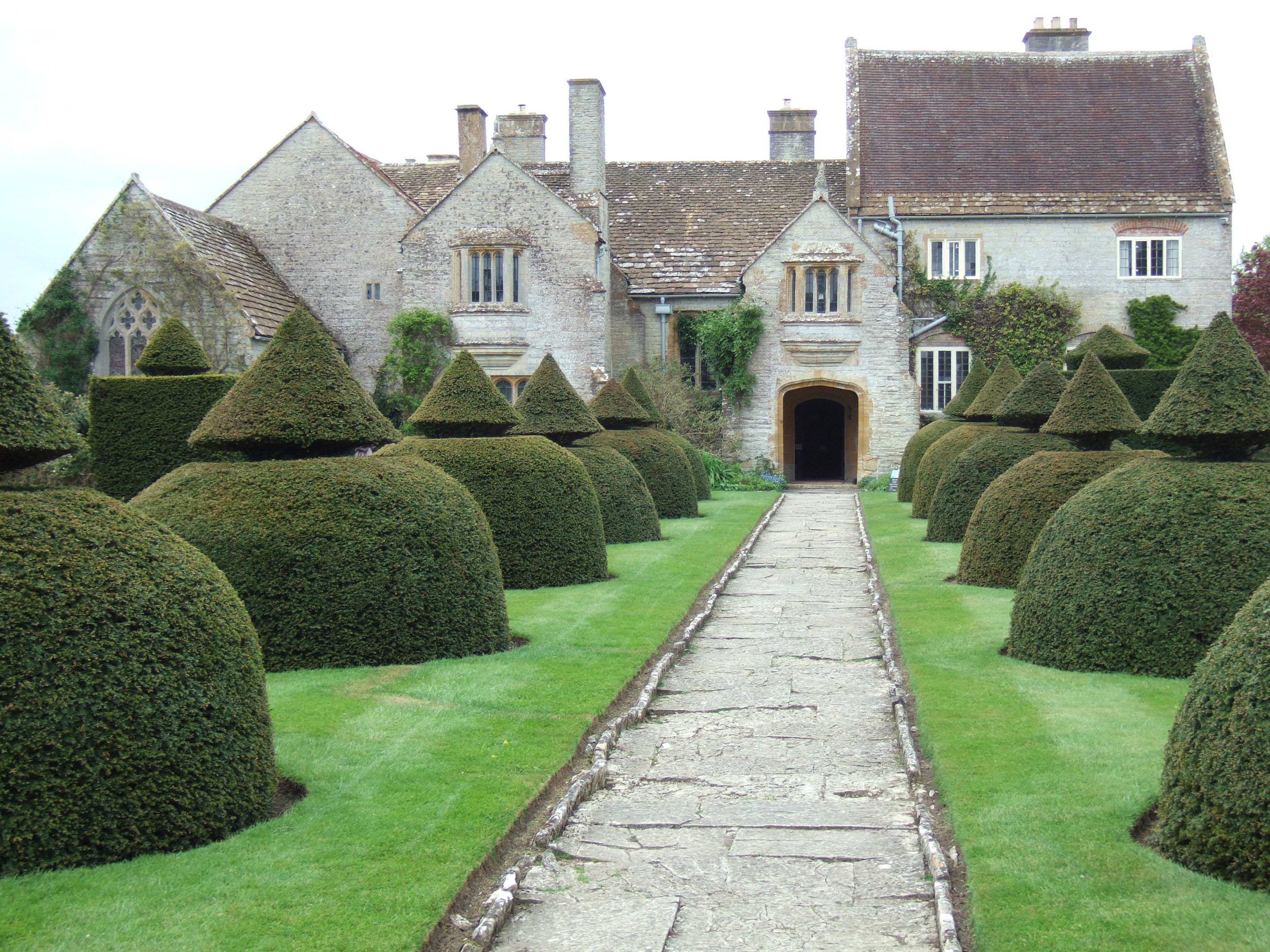
My historical novel The Knot is an exploration of one such interstice in herbal history. It pieces together known fragments of the life of Early Modern herbalist Henry Lyte, who lived and died at his family seat, Lytes Cary Manor (now owned by the National Trust), on the edge of the Somerset Levels. Henry’s translation of Rembert Dodeon’s Cruydeboeke was published in 1578. About 600 pages long, he called it A Niewe Herball or Historie of Plantes, and it became the standard work on herbs in the English language in the latter part of the 16th century.
His aim was that the ordinary person, without the advantage of an elite education, could access information about readily-available plants for medicinal purposes, hoping that ‘…even the meanest of my Countrymen, (whose skill is not so profound, that they can fetch this knowledge out of strange tongues, not their abilitie so wealthy, as to entertaine a learned Physition) may yet in time of their necessitie have some helps in their owne, or their neighbors fields and gardens at home.’
It was a phenomenal task, because, aside from translating the main body of text, for every one of the 900 plants described, Henry would have had to identify and ascertain the precise English name for the Latin, French, Greek or Arabic already cited in the original. In the 16th century, with a myriad range of local names and varieties to negotiate, this could only have been done by someone with a thorough practical working knowledge of botany and plant identification. Lyte also had the benefit of being situated within a personal network of apothecaries, physicians, seedsmen and plantsmen, simplers, and scholarly men of science such as the intellectual group centred around Lime Street in London.
Archival Research
As I began research for my novel it became clear that primary archival or textual source material relating directly to Henry Lyte (1529-1607) was limited, but exciting. Henry’s own working copy of Charles de L’Ecluse’s French translation of the Cruydeboeke is tucked away at the British Library (he translates from this French version, rather than the original Flemish). The printed folio pages are covered in notes in Henry’s own meticulous handwriting, giving us insight into other herbalists (particularly William Turner, who was Dean of Wells cathedral nearby). There are observations he makes about plants in Somerset, in different coloured inks. There are smudges and crossings out and doodles, a list of trees grown at Lytes Cary during his time, and recipes for horse-medicine. In the Somerset Heritage Centre and at the National Archive there are other documents – a hand-drawn family pedigree, including likenesses of Henry and other family members. There is a commonplace book by his son Thomas; pages in an untidy Tudor scrawl that detail aspects of the working estate at Lytes Cary, from tenant farmers to crops and field names. There is a family history written by the 19th-century historian Maxwell-Lyte, and a succession of legal documents. But after this the obvious trail dries up – we know, frustratingly, that correspondence between Henry and other herbalists was lost in a fire in the 1700s.
So, what material existed was vital to the project, but on its own wasn’t enough to vividly describe the world Henry Lyte operated within, nor enough to ask questions about what his character might have been. But a broader picture can be drawn from a range of lateral approaches to research, in order to build a body of supportive material; enriched by peripheral evidence and sensory observation, that casts useful light on the subject in question.
Practical Investigation and Observation
One can’t (arguably) think about plants or herbs without considering the land they grow from; I looked keenly at the local Somerset landscape as it is now, closely observed and kept notes about the wild flora growing in the region around Lytes Cary throughout the seasons, the earth in different fields on the estate, the soil conditions, prevailing weather and light. I investigated how this landscape might have been in the 16th century, and how it was used and worked, looked at old maps, landscape surveys, then mentally shifted roads and highways and ditches in order to understand the flow of people and water across the landscape. I thought about how the wetland would have been before various drainage projects over the centuries had taken place. I planted herbs in my own garden and watched them, and watched specific weeds intently, like a madwoman. We know that Henry had an extensive garden planted with rarities at Lytes Cary, but that he was just as interested in the virtues of the humble wayside weed. I tried to think like an Tudor gardener when I dug in my own flower beds, looked at fragile 16th-century gardening manuals in the British Library that detail pruning, grafting and plans for knots and mazes, and then gardening tools at the Museum of Garden History at Lambeth and the Somerset Rural Life Museum.
I visited historically-planted gardens, such as that at the Weald and Downland Museum in Sussex, and was lucky to attend courses run by expert medical herbalists Christina Stapley and Ruth Mannion-Daniels. Certain practical elements of historical herbalism can only be understood by hands-on trial-and-error, smelling and mixing (that first precious virgin trickling from the spout on an alembic, having waited hours for an aromatic water to reach boiling point over a brazier!), and by asking questions of people who know the old herbals inside out. At home I followed recipes for the less-poisonous remedies and tasted them and experimented on unwitting members of my family. I ground powders and macerated oils and dried roots in the oven.
Early Modern Scientific Renaissance
There is a lot to be gleaned from just looking; looking hard and noticing, writing it down. Observation was at the heart of the Early Modern scientific renaissance; the previous (received) wisdom from the ancients (Dioscorides, Galen, Pliny) was being juxtaposed with a contemporary emphasis on empiric study, collecting of specimens and their careful scrutiny. It is important to remember that the Niewe Herball was at the cutting edge of science at the time. The Lime Street group that was part of this new wave in London was very international, with a strong Dutch contingent and included scholars such as James Cole, Mathias Lobel, Thomas Penny and Thomas Moffat. Lobel was in Bristol for a while, not far from Lytes Cary.We know that Rembert Dodeons himself was involved with the reworking of the Niewe Herball, and sourced extra illustrations for it himself.
Why has this influential work, such a crucial contribution to the development of scientific knowledge in England, been so forgotten? Firstly, because twenty years later John Gerard’s still-famous Herball or General Historie of Plantes (1597) was published – it had great visual appeal and sold widely, eclipsing not just Lyte’s work but that of the whole scientific community in Lime Street, many of whom did not choose to publish, and whose legacies are found mostly in correspondence. And secondly, because so much of Henry’s paper-trail is lost to posterity – history is skewed like that.
But that’s where a novel can step in, because by visualising a researched event or sequence of parallel events in time and space, fiction can become a test-bed, another means of re-enactment for historical examination. As a novelist one is always trying to make the past ‘current’ in the reader’s inner eye – an immersive experience. I think of historical fiction as history-in-the-round, an experiment which, if done with enough respect for the subject can cast useful light on how it might have ‘been’, or – at the very least – raise a series of considered what-ifs.
Bibliography
There are many books I’m grateful to have been able to refer to during research, but some I couldn’t have done without: Henry Lyte’s A Niewe Herball (1578); his own copy of Rembert Dodoens’s Cruydeboeck, translated by Charles de L’ Ecluse into French as Histoire des Plantes (1557); his son Thomas Lyte’s commonplace book, held at the Somerset Heritage Centre, which has also been transcribed by Nancy Langmaid.
Arber, A., (1953). Herbals: their origin and evolution. Cambridge: Cambridge University Press.
Bown, D., (2008). Royal Horticultural Society Encyclopedia of herbs. London: Dorling Kindersley.
Egmond, F., (2010). The world of Carolus Clusius: natural history in the making, 1550-1610. London: Pickering & Chatto.
Harkness, D.E., (2008). The Jewel House: Elizabethan London and the scientific revolution. New Haven: Yale University Press.
Henderson, P., (2005). The Tudor house and garden. New Haven: Yale University Press.
Hill, T., (1652). The gardener’s labyrinth. R. Mabey ed. Reprint 1988. Oxford: Oxford University Press.
Laroche, R., (2009). Medical authority and Englishwomen’s herbal texts 1550-1650. Farnham: Ashgate.
McLean, T., (1989). Medieval English gardens. London: Barrie and Jenkins.
Maxwell-Lyte, H., (1895). The Lytes of Lytescary. Reprint from Proceedings of the Somersetshire Archaeological and Natural History Society.
Rohde, E.S., (1971). The old English Herbals. New York: Dover Publications.
Turner, W., (1551). A new Herball. G. Chapman and M. Tweddle eds. Reprint 1995. Cambridge: Cambridge University Press.