By Dr Barbara Böck, Research Professor, CSIC, Madrid
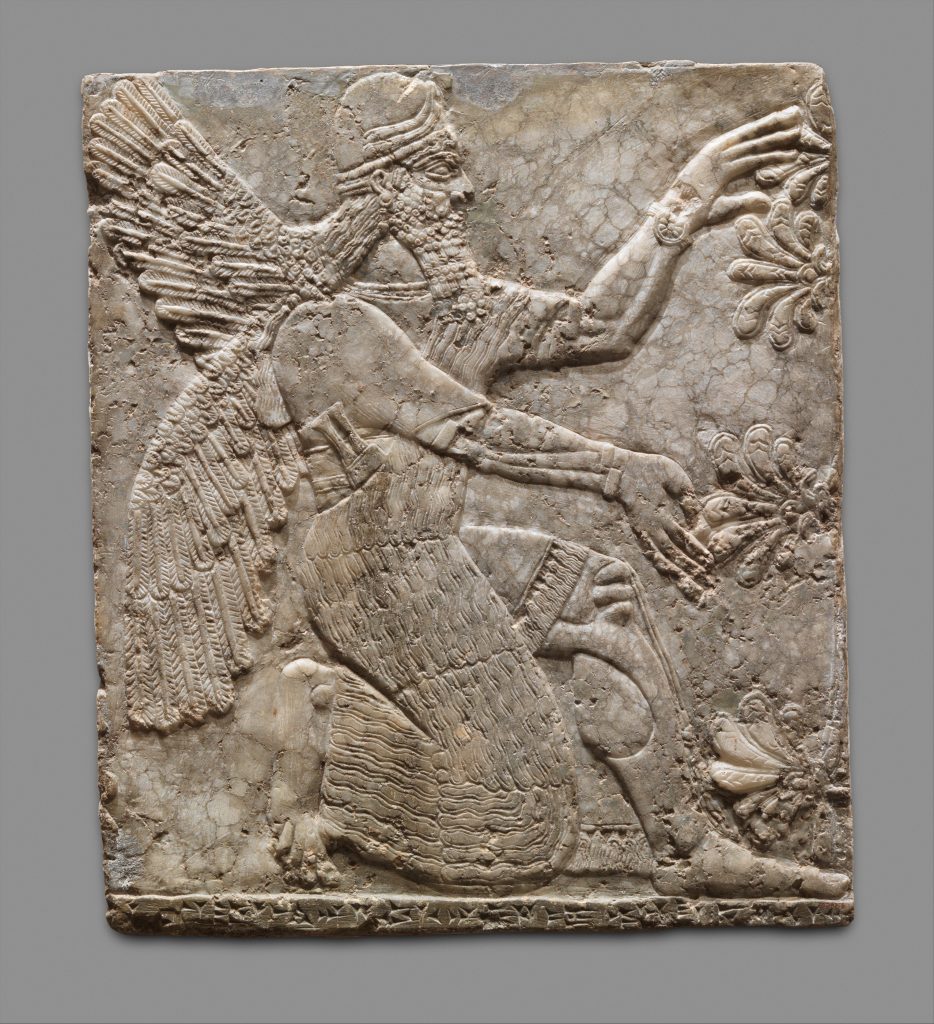
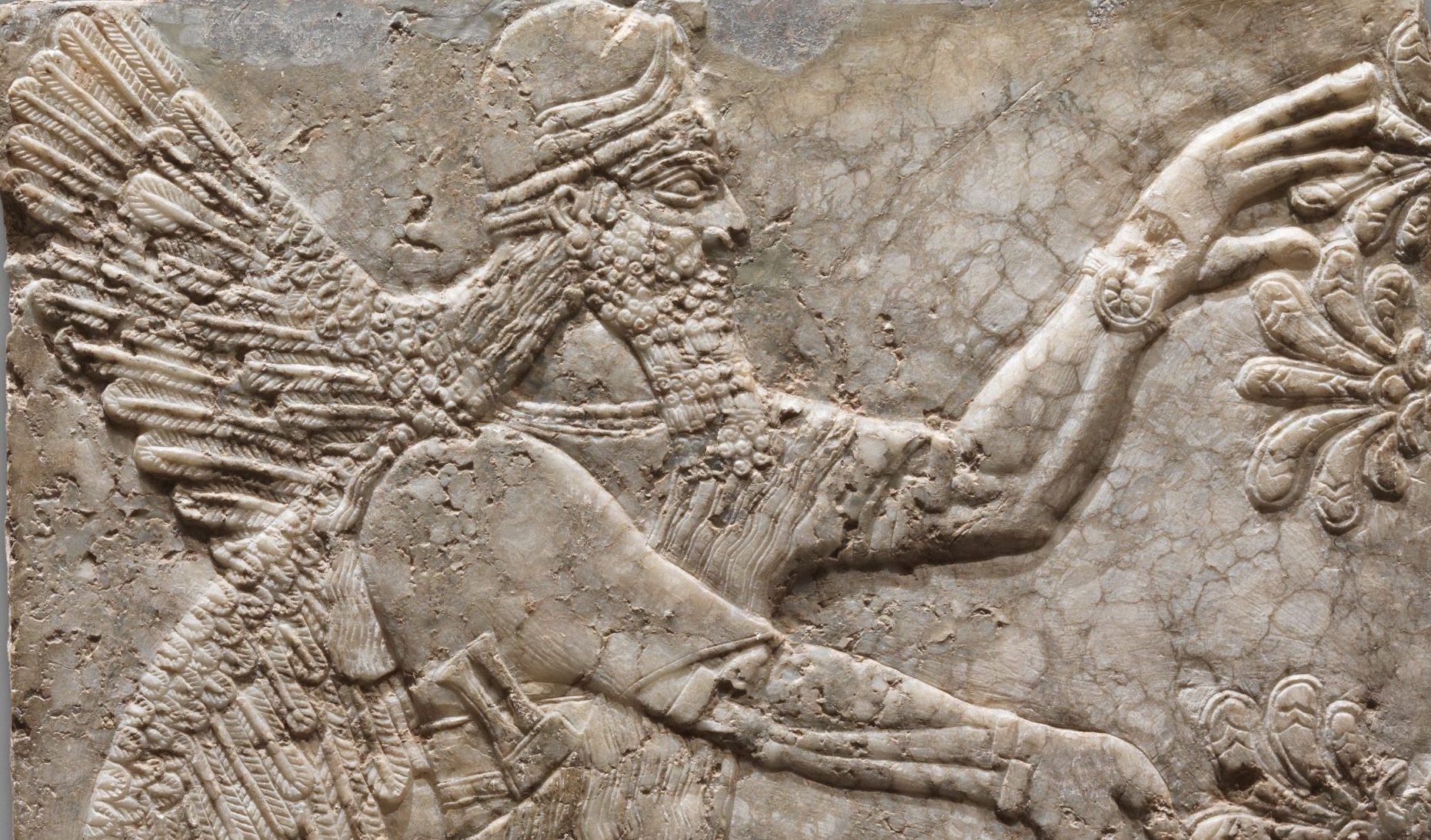
Gypsum Alabaster relief from the Northwest Palast at Nimrud, 883-859 BCE.
Copyright: The Metropolitan Museum of Art, New York (Gift of John D. Rockefeller Jr., 1932).
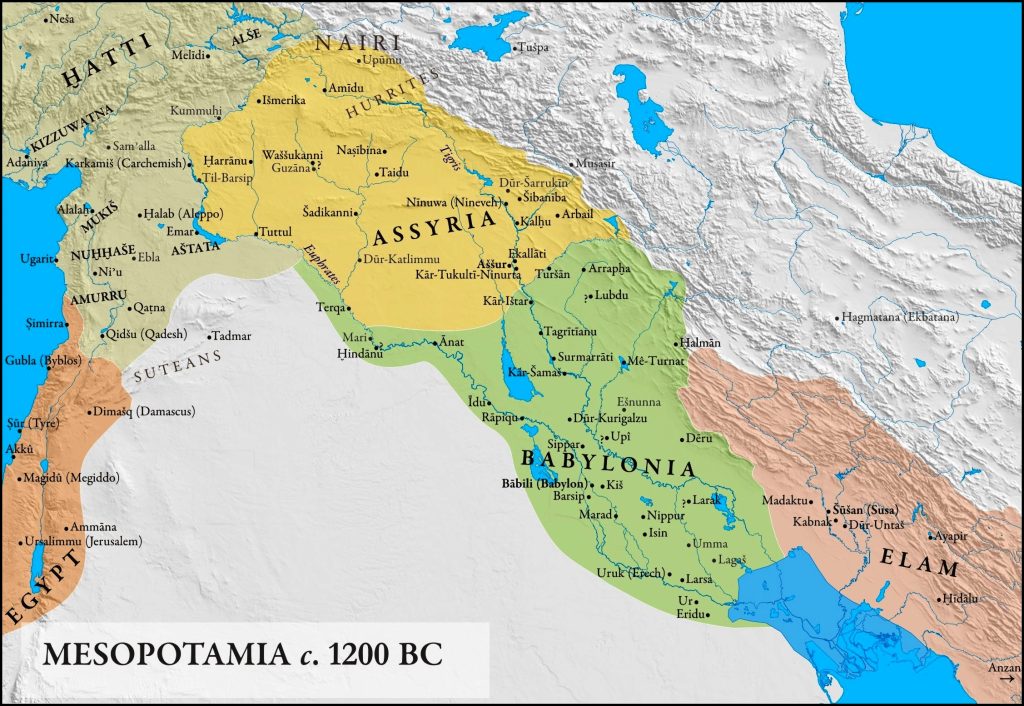
Ancient Mesopotamia, once home to states of great political and cultural power ranging from the fourth to the first millennium BCE, was particularly renowned in antiquity for its expertise in astronomy and divination.
The historical region, defined by the river system of the Euphrates and Tigris, corresponds today to the area of Iraq, eastern Syria, and southeastern Turkey. The herbal and medical knowledge of Mesopotamia, however, was viewed with criticism. Although the Greek historian Herodotus greatly admired the sophisticated architectural skills of the Babylonians, such as the impressive temple tower (ziggurat) and the Hanging Gardens of Babylon, his view of their healthcare system was rather dim. The inhabitants of the city, he writes disapprovingly, “bring out the sick to the marketplace; for they do not use physicians.” (Book I, chapter 197).
Creative Commons Attribution-Share Alike 4.0 International license.
It was not until the end of the nineteenth century, with the decipherment of ancient Mesopotamian sources, namely clay tablets inscribed in cuneiform and written in the Sumerian and Akkadian languages, that it became clear that Herodotus had been utterly mistaken. The cuneiform texts not only revealed the many names of healing practitioners but also showed that Assyrian and Babylonian doctors had at their disposal a great variety of remedies to manage disease and illness effectively (see e.g. Geller 2010, Böck 2014, Scurlock 2014, Steinert 2020). Despite this wealth of material, the medical achievements of ancient Mesopotamia have attracted only limited interest outside the field itself. This may be due to the fact that the cuneiform texts often appear peculiarly strange.
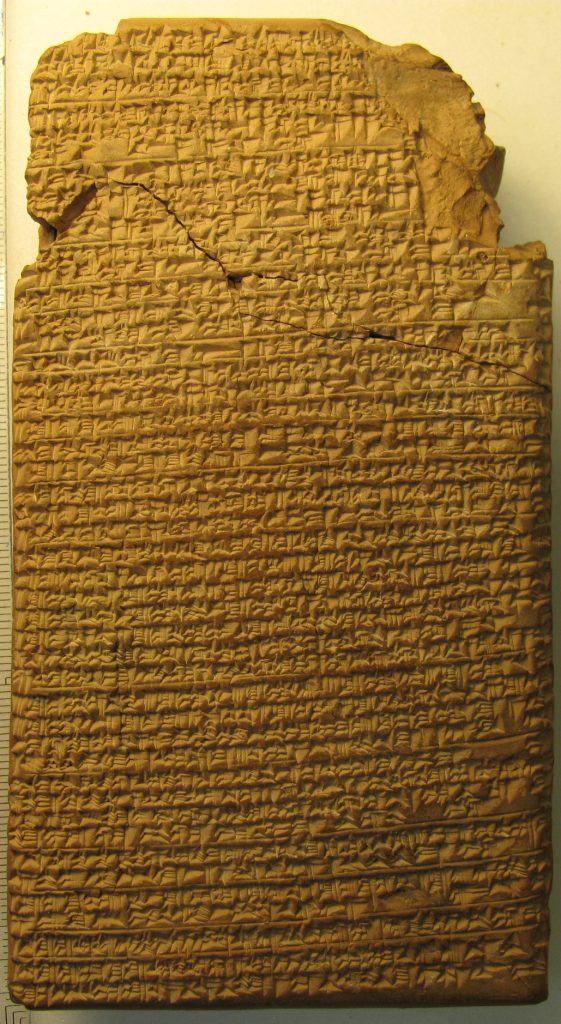
kept at The British Museum with recipes for digestive
and intestinal disorders (length 13cm, width 7.2cm),
ca. 5th – 4th century BCE. Copyright: Photo author.
Many of them present a mixture of magical and medical-therapeutic measures, which raises doubts as to whether the cures relied largely on a placebo effect. Magical cures such as the following to treat testicular disorders “Catch a living eel, have the patient urinate on its head, release the fish into a river, then the patient will recover” are on par with therapeutic recommendations and were collected in the same cuneiform tablets (Geller 2005: 40, 22-23).
Secondly, medical texts employ a highly technical language that poses challenges for translation and interpretation. Though different extraction methods were known they did not receive a proper term; instead, the procedure was described. Thus, the instruction “to keep ingredients soaked in a liquid overnight on the roof” may be interpreted as cold maceration, while the indication “to enclose ingredients in a domed oven to be removed when it has cooled off” as warm maceration (Böck 2009: 112-116). Thirdly, many medical prescriptions list a large number of ingredients, which in turn raises the question of whether the ancient Mesopotamians operated according to the principle that “more is better.” To make matters worse, very little is known about the identification of the plant remedies themselves.
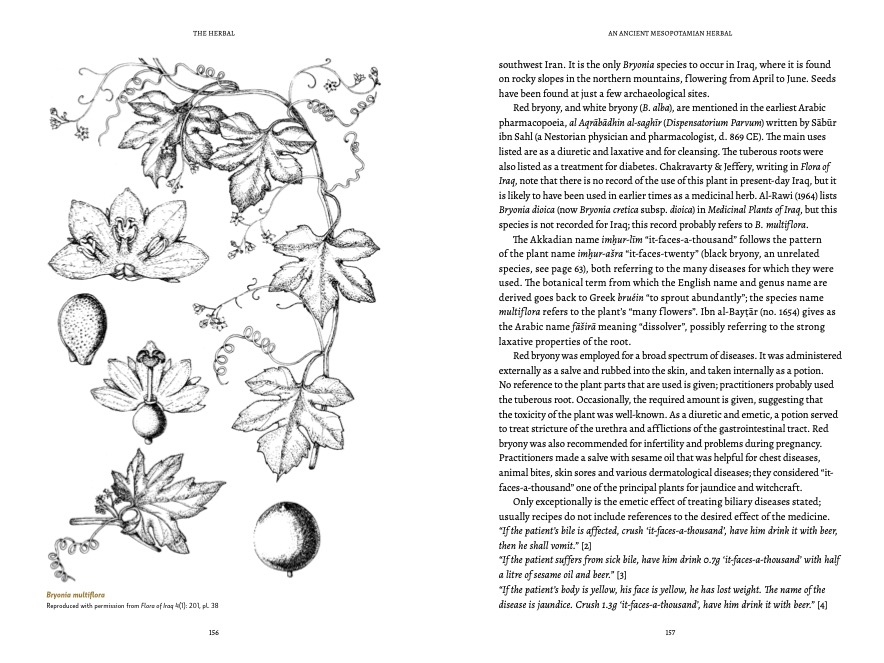
An Ancient Mesopotamian Herbal by Böck, Ghazanfar and Nesbitt (2024) picks up precisely at this point providing a look into the notebook of Assyrian and Babylonian herbalists.
Combining research approaches from botany, archaeology, and Assyriology, it seeks to answer the question of what information is necessary to identify plant names. One of the identifications proposed in the book is particularly noteworthy, as it offers an unprecedented insight into the pharmacological knowledge of Assyrian and Babylonian healers. A plant that had so far eluded identification – one of the most frequently used – bears the evocative Akkadian name imhur-lim, literally meaning “It-faces-a-thousand.” (see Böck, Ghazanfar and Nesbitt 2024: 155-159).
The plant belongs to a small group of herbal medicines employed for a wide variety of ailments, which is possibly the reason for the name. As a single ingredient, it was applied externally as a salve for lung diseases, animal bites, skin sores, and other dermatological conditions. When prepared as a potion, the herb was taken to treat urethral strictures, gastrointestinal disorders, and gynaecological problems. Magical spells against witchcraft also invoke imhur-lim, emphasizing its power to frighten sorcerers. Several medical prescriptions indicate that only a very small dose was required (from 0.65 g to 1.3 g) — an intriguing detail, since dosage information is often omitted; because the correct amount was known to practitioners, there was apparently no need to record it. (see Böck, Ghazanfar and Nesbitt 2024: 157-158).
The identification of imhur-lim with red bryony (Bryonia multiflora) introduces a completely new dimension to Mesopotamian medical knowledge, placing Assyrian and Babylonian practitioners in a prominent position in the history of herbalism. Many of the applications of imhur-lim are attested in traditional Iraqi medicine, where bryony is used to relieve pain and coughs associated with lung ailments and serves as an emetic, purgative, diuretic, vermifuge, emmenagogue, and toxic agent (Al-Rawi and Chakravarty 1964: 20). Ancient Mesopotamians prescribed the plant to induce vomiting, stimulate urination, treat intestinal worms, prevent miscarriage, and possibly terminate unwanted pregnancies (Böck, Ghazanfar and Nesbitt 2024: 157-158). Its applications for serpent bites, scorpion stings, and itchy skin eruptions anticipate, by at least eight centuries, the recommendations of the “father of pharmacology,” Dioscorides (Book IV, chapter 182).
Literary mentions of imhur-lim in magical spells and rituals also gain new significance, possibly because of the toxic and irritating compounds in the plant’s berries and sap, which cause blistering. Mesopotamian exorcists threatened to strike the witch’s cheek with the plant. What was previously understood as a figurative or artful description of a scene now takes on a literal meaning: contact with the plant would burn her skin, producing a scar that marked her as an evildoer (Böck, Ghazanfar and Nesbitt 2024: 159). Interestingly, the European Bryonia species (B. dioica and alba), known as English mandrake and poisonous, appear also in the context of witchcraft. However, unlike in Ancient Mesopotamia they were employed by the witch herself, either as ingredient in her brews or in rituals of black magic (Carter 2003: 145-146; Northall 1896: 140).
The identification with Bryonia multiflora was made possible through careful reading and interpretation of entries about imhur-lim in cuneiform plant description texts. Although these texts lack illustrations, the botanical explanation can be so precise that the experienced eye of a botanist can, in fact, visualize the plant. Imhur-lim is described with the following words: “The plant creeps over the ground like colocynth; its tendrils look like those of a melon; its leaves are divided; its seeds look like those of madder; its root is bitter and soft. Its name is ‘it-faces-a-thousand’.” (Böck, Ghazanfar and Nesbitt 2024: 155).
There are only a few plants in Iraq that meet this description, and even fewer when the medicinal uses are also taken into account. Ancient Mesopotamians compared the growth of bryony to that of bitter apple (Citrullus colocynthis), a plant typical of the deserts and wadis of Mesopotamia that climbs shrubs with its tendrils, whereas Dioscorides described bryony as resembling cultivated grapes, which attach themselves to trees and bushes in the same manner (Book IV, chapter 182: 1). The comparison between the two traditions illustrates the deep familiarity of ancient Mesopotamian herbalists with their flora highlighting their ability to identify plants.
References
Al-Rawi, A. and Chakravarty, H.L., (1964). Medicinal Plants of Iraq. Baghdad: Government Press.
Böck, B. (2009). On medical technology in Ancient Mesopotamia. In: A. Attia and G. Buisson ed. Advances in Mesopotamian Medicine: From Hammurabi to Hippocrates, Leiden – Boston: Brill, pp. 105-128.
Böck, B., (2014). The Healing Goddess Gula: Towards an Understanding of Ancient Babylonian Medicine. Leiden – Boston: Brill.
Böck, B., Ghazanfar, S.A. and Nesbitt, M., (2024). An Ancient Mesopotamian Herbal. Richmond: Royal Botanic Gardens, Kew.
Carter, A.J. (2003). Myths and mandrakes. Journal of the Royal Society of Medicine 96: 144-147.
Diocorides, Book IV. Translated by L.Y. Beck, (2017). Pedanius Dioscorides of Anazarbus. De materia medica. Hildesheim–Zürich–New York: Olms-Weidmann, pp. 250-329.
Geller, M.J. (2005). Renal and Rectal Disease Texts. Berlin. – New York.
Geller, M.J., (2010). Ancient Babylonian Medicine. Theory and Practice. Chichester: Wiley-Blackwells.
Herodotus, Book I. [on-line] Available at :https://penelope.uchicago.edu/Thayer/E/Roman/Texts/Herodotus/1d*.html
Northall, G.F. (1896). A Warwickshire Word-Book. Oxford: Oxford University Press Warehouse Amen Corner, E.C.
Scurlock, J.A., (2014). Sourcebook for Ancient Mesopotamian Medicine. Atlanta: SBL Press.
Steinert, U., (2020). Disease Concepts and Classification in Ancient Mesopotamian Medicine. In: U. Steinert ed. Systems of Classification in Premodern Medical Cultures. Sickness, Health, and Local Epistemologies. London–New York: Routledge, pp. 140-194.
Further Reading
Böck, B., (2025). Parallel Worlds: Ancient Mesopotamian Medicinal Plants Knowledge and Dioscorides’ De materia medica. In: S.M. Oberhelman ed. Manuscipts, Plants, Remedies in the Mediterranean Tradition. Tome 2: Plants Botany, Gardens, “materia medica”, ethnopharmacology. Berlin–Boston: De Gruyter, pp. 79-108.
Böck, B., (2021). Mind-altering Plants in Babylonian Medical Sources. In: D. Stein, S. Kielt Costello and K. Polinger Foster eds. The Routledge Companion to Ecstatic Experience in the Ancient World. London – New York: Routledge, pp. 121-137.
Ghazanfar, S.A. and Thorogood, C.J., eds. (2023). A Herbal of Iraq. Richmond: Royal Botanic Gardens, Kew.
Oppenheim, A.L., (1977). Ancient Mesopotamia. Portrait of a Dead Civilization. Chicago: The University of Chicago Press.
Bio

Dr. Barbara Böck is Research Professor of Assyriology at the CSIC (Spanish National Research Council), specialized in ancient Mesopotamian medicine and medicinal plants, magic and divination. Her major publications include the study of ancient Mesopotamian medicine (2014), the analysis of incantations used in magical and medical therapies of embrocation (2007), and the principal text edition of the divinatory practice of physiognomy (2000). She is presently preparing the critical text edition of pharmacological cuneiform treatises including plant description texts, books of simples and lexical glossaries. Her current research project focuses on the identification of Biblical plant names in their Ancient Near Eastern context.
Email: barbara.boeck@cchs.csic.es