By Mika Hyman, University of Cambridge & Royal Botanic Gardens, Kew.
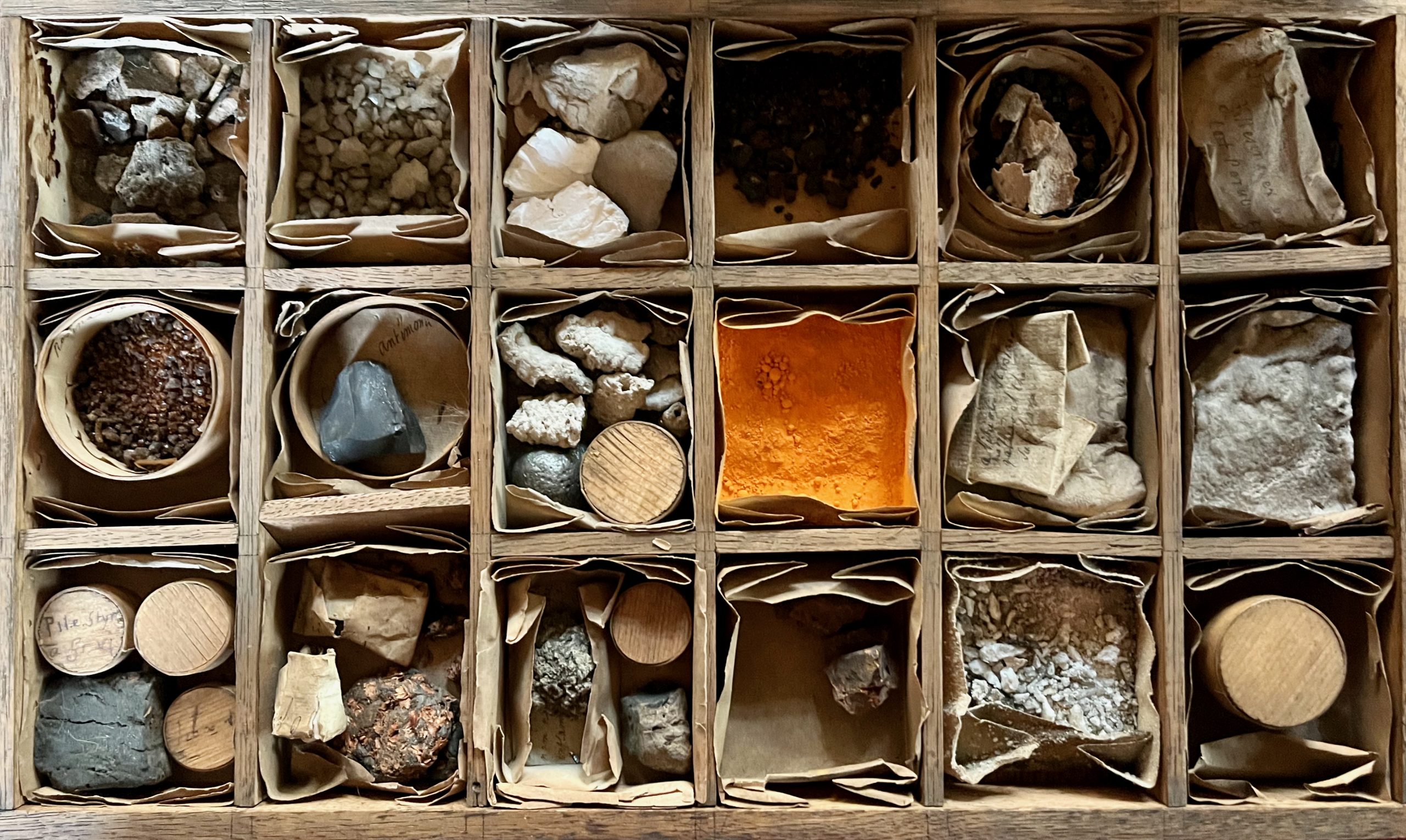
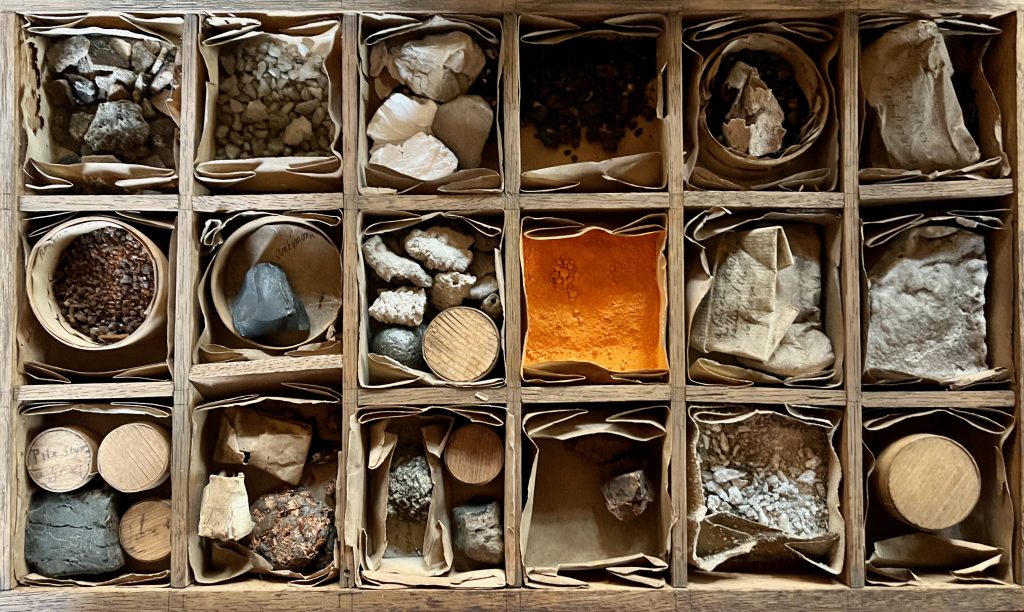
In the mid 1700s, the physician William Heberden (1710-1801) donated a cabinet to his old Cambridge college, St. John’s. The furniture itself was relatively ordinary looking, but its contents were not. Twenty-eight drawers and two shelves contained hundreds of materia medica specimens collected, concocted and used by Heberden [figure 1].

I first encountered Heberden’s cabinet when searching for a very specific item – a large eighteenth-century coconut said to be lurking in the back room of St John’s College. The coconut was very impressive, but I walked out of this first visit more curious about some of the other items I had seen: packets of ginseng, a scorpion in a glass vial, bright yellow arsenic, opium prepared in numerous ways. The list goes on. Such an array of materials was entrancing as was the story behind the physician that owned the cabinet.
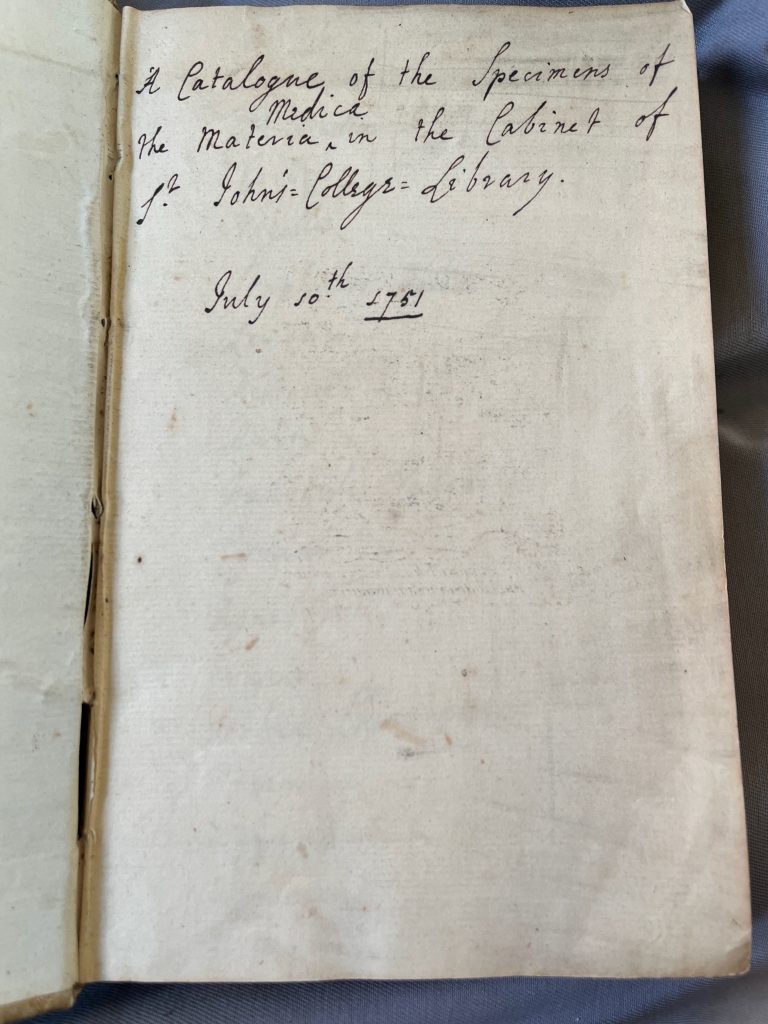
Heberden is rarely discussed in contemporary histories of medicine, but during his own lifetime and some decades after it, he was held in great esteem and was referred to as the “eighteenth century-Hippocrates,” and the “last of our great physicians” (Dobson, 1921). His study of medicine in 1724 began thanks to a scholarship for St. John’s College, Cambridge and, after obtaining his MD degree in 1739, he stayed in Cambridge practicing medicine and teaching. He would eventually move to London in the late 1740s and was given the honour of delivering the annual Goulstonian lecture for the Royal College of Physicians in 1749 (Heberden, 1989; Vaughn, 1966; Rolleston, 1933). The materia medica cabinet in question comes from his time teaching in Cambridge, but the catalogue he compiled for it in 1751 suggests it also remained part of his work as he transitioned to London [figure 2].
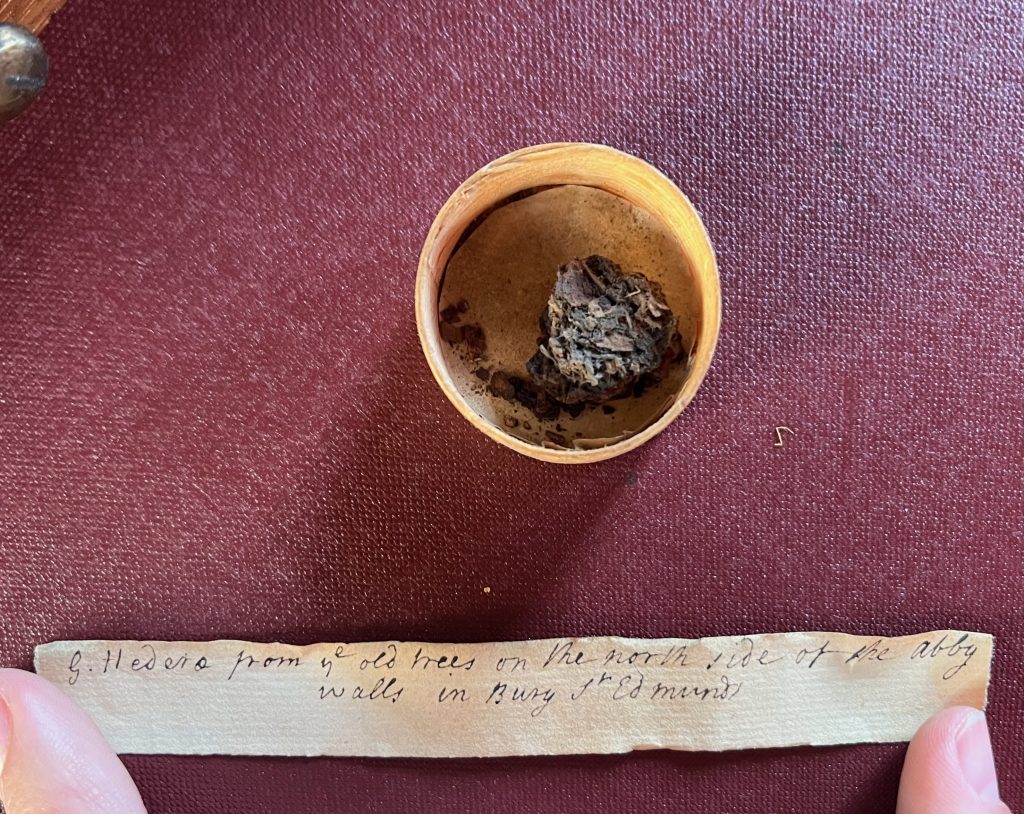
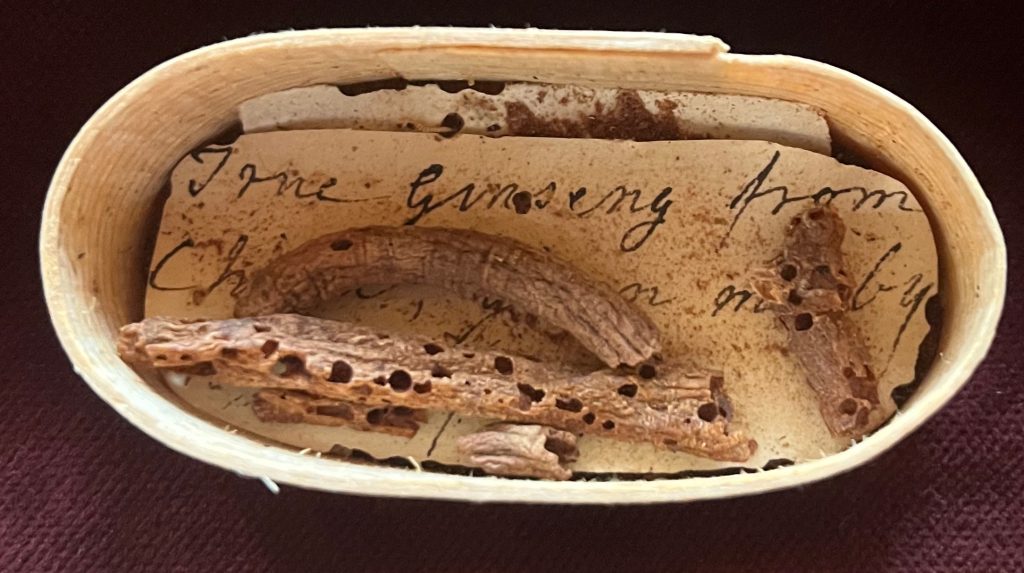
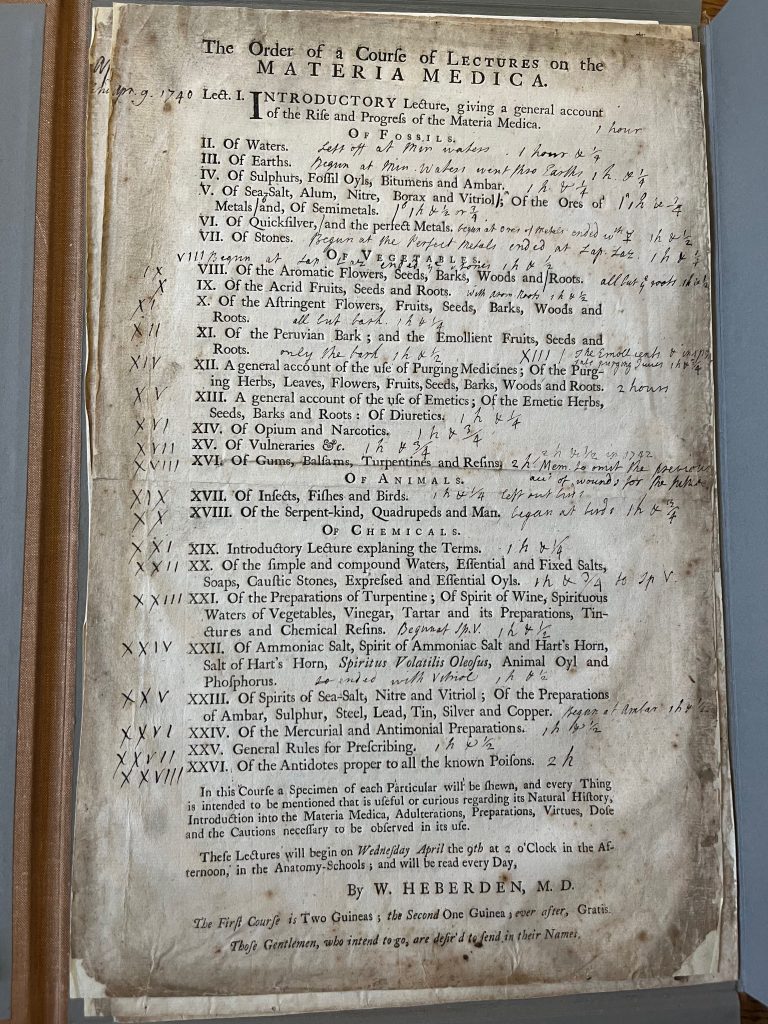
Although this materia medica cabinet is a contained entity, as with many collections, the opportunities for study can seem endless. One might focus on a single object, say the sample of “true ginseng from China given me [by] Mr Raymond” or the one of “gummi hedera from an old tree near the abbey of Bury St. Edmund’s” [figure 3 and 4]. These object analyses offer key insights into Heberden’s collecting practices as well as the local and global dimensions of the cabinet’s materials. Or, one could also take a material such as cinchona, Cortices peruviana, and track its different preparations across the cabinet’s drawers. For example, in Drawer Eighteen we find resinous preparations while in Drawer Twenty-One there are specimens of the bark itself as well as some pills made from it; Drawer Twenty-Six holds a small jar containing an extract from it [figure 5]. In both approaches, Heberden’s written material—his materia medica lecture syllabi, published papers, as well as correspondence—all provide further valuable contextual material [figure 6].
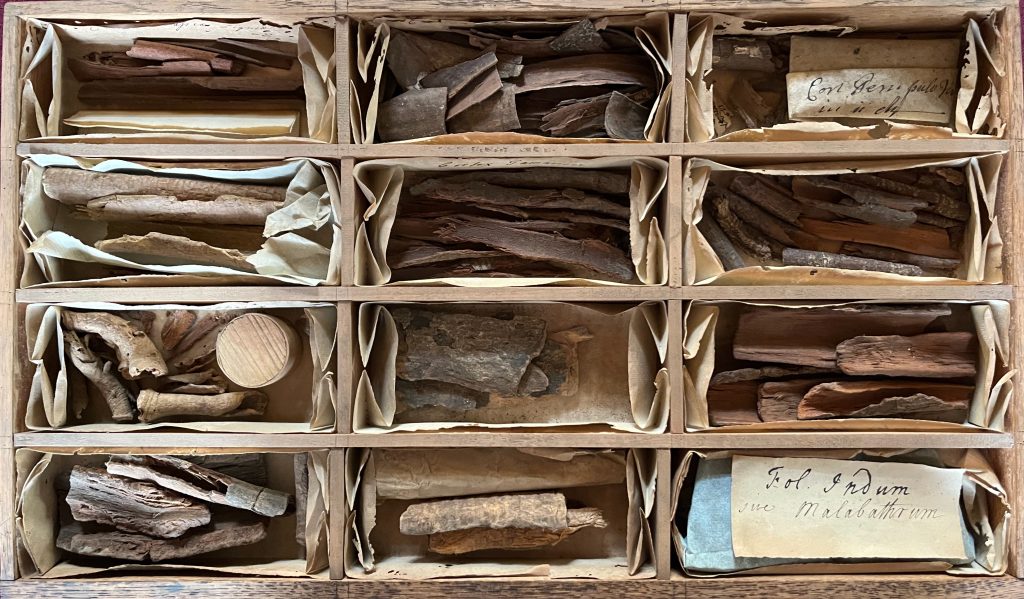
For my own initial study of Heberden’s cabinet, I became fascinated by its organisational logic. At first glance, the drawers seem to follow some typical eighteenth-century schemes: some contained only seeds, others only roots, and some contained stones or salts and stones. I was interested in the moments in which these orders broke down. Drawer Eighteen, which according to an earlier plan for the cabinet, was meant to just contain a few chemical and inspissate (thickened) juices, held an even broader range of materials including chemical preparations, metals, inspissate juices and resins. Was it possible that other classificatory systems were at play, ones driven by usage rather than physical form?
To think about other ways in which specimens in the cabinet might have been arranged, I turned to Heberden’s 1749 Goulstonian “Lectures containing some observations on the history, nature, and cure of poisons” (Heberden, 1749). In these lectures, Heberden tracked the complex relationship between poisons and medicines. Beginning with a discussion of the ancient Greek pharmakon, he acknowledged the ways in which many substances could operate as both poison and medicine. He then went on to subcategorise poisons into “acrimonious” ones and “nervous” ones and negotiated the ways in which these could be carefully used alongside one another to balance each other’s properties out. On one level, these lectures offered insights into Heberden’s own interests in classification systems. On another, they offered insights into how a physician was grappling with tangled, tense categories.
By reading these lectures alongside a study of the cabinet’s contents, I started to think about the ways in which Heberden’s understandings of different poisons helped to structure the materia medica’s arrangement. In Drawer Eighteen opium—a nervous poison and an “ambiguous drug—is positioned alongside antimonial preparations—acrimonious poison. As Heberden’s writings explore, these substances could balance one another when administered with care (Heberden 1806). Thus, the organisation of substances in the cabinet perhaps offers insights into how they might have been re-arranged and used together to remedy a patient.
Opening Heberden’s cabinet remains a fascinating and inspiring entry point into the worlds of eighteenth-century medicine. The cabinet was, very likely, a teaching cabinet in which specimens were used in Heberden’s ever evolving materia medica lectures. As it sits in the back room of the old library St. John’s College, it continues to be a teaching cabinet, offering valuable insights into questions of conservation and curation, as well as lessons in herbal history, pharmacy and history of medicine.
References
Dobson, Austin. Later Essays 1917-1920. Oxford University Press, 1921. http://archive.org/details/lateressays00dobsiala.
Heberden, Ernest. William Heberden: Physician of the Age of Reason. Royal Society of Medicine Services, 1989.
Heberden, WIlliam ‘Of Poisons’. 1749. St. John’s College Library, Special Collections, W.76.
Heberden, William. Commentaries on the History and Cure of Diseases. London, Payne, 1806. http://archive.org/details/commentariesonhi00hebe.
Hill George Birkbeck. Boswell’s Life Of Johnson Vol-Iv. 1934. http://archive.org/details/in.ernet.dli.2015.475629.
Rolleston, Sir Humphry Davy. The Two Heberdens: William Heberden the Elder, 1710-1801, William Heberden the Younger, 1767-1845. 1933.
Vaughan, Lovella. ‘William Heberden(1710-1801)Discoverer of Angina Pectoris’. 1996.
Biography
Mika is currently a PhD Student at the University of Cambridge and Royal Botanic Gardens, Kew on Mobilising Chocolate: Plants, Pathogens and People 1880-2000. She is also a Research assistant for the History and Philosophy of Science department on the Cambridge Collections, Connections, Communities funded project, Digitising Philippine Flora.