by Jemma Houghton, PhD candidate in the History of Science, Technology and Medicine, University of Manchester
The aim of this blog is to provide students and researchers with an introductory source base to examine the use of plants in pharmaceutical research during the twentieth century.
Background
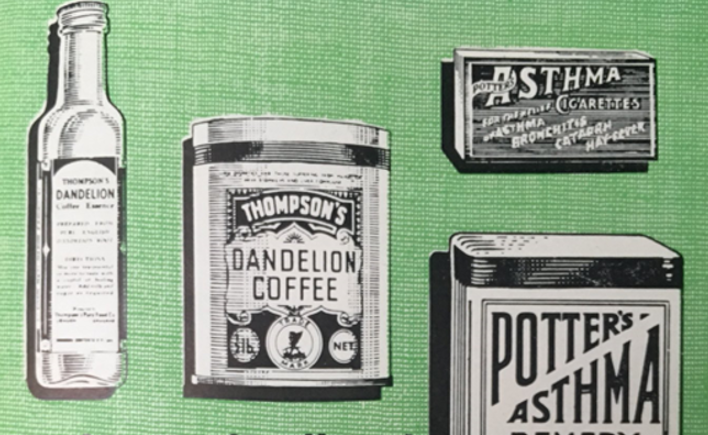
The general trend portrayed within the historiography on twentieth century pharmacy is one that examines the rise of synthetics, the ‘era of antibiotics’ and the development of biomedicine. This focus on new ‘modern’ approaches has meant that – perhaps unintentionally – medicinal plants have often been presented as being increasingly superseded within western pharmaceutical practice. However, this was not the case and plants remain a key facet of research into new drugs even today.
This blog, therefore, will present a brief overview of two secondary sources that provide a useful introduction to the topic of medicinal plants in twentieth century drug research. It will also then provide some links to useful sources for studying plants in twentieth century pharmacy.
- Artemisia and malaria
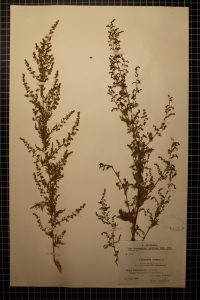
Figure 1: Herbarium specimen of Artemisia annua. Credit: Manchester Museum Herbarium, used with permission.
The emergence of artemisinin extracted from Artemisia annua L. as a treatment for malaria in the late 1970s is a well-known case of medicinal plants being employed within twentieth century pharmacy. A particularly valuable history of this development has been written by Suzanne Taylor and Virginia Berridge (2006). They not only discussed the arrival of this drug within Western medicine but placed it within the context of the perceived dominance of synthetic drugs. In doing so Taylor and Berridge demonstrated how plant research may have been marginalised with the onset of popularity in synthetics but they remained ever present. Following increasing discussions on the problems of synthetic drugs, interest in plants like Artemisia annua corresponded with a revival of plants within laboratory research at the end of the century.
- Antidiabetic medicinal plants
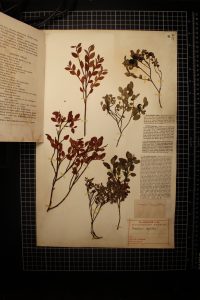
A useful area for analyses that contradict the notion that the introduction of ‘modern’ approaches diminished research into medicinal plants is diabetes. The application of biotechnology, namely the production of insulin, has largely dominated the treatment of this disease. However, Axel Helmstädter (2012) provided an account that demonstrated that the discovery of insulin in 1921 actually corresponded with a greater interest into antidiabetic plants. Helmstädter’s article is a useful introduction into plants in antidiabetic research as not only does he discuss research into plant compounds but also how traditional herbal knowledge was revisited within a clinical context.
Useful online primary sources
Depending on which disease is under investigation, there are countless journals as well as archives that can be employed in the investigation of medicinal plants within twentieth century drug research. Here are some that can be found online as a starting point.
The British Medical Journal
BMJ articles have been digitised from 1840 are available online at https://www.bmj.com/archive. While there is a search option available to find articles it is often easier to use JSTOR as all the articles are also available from this website . The benefit of using JSTOR is that there are more criteria for narrowing down a search. To use JSTOR to search through the BMJ:
- Click Advanced Search
- Enter any search criteria (phrases, date range, etc)
- Type British Medical Journal into the Journal or Book Title section then click search at the bottom
The Lancet
The Lancet, has been digitised and is available from 1823 at https://www.sciencedirect.com/journal/the-lancet
- Enter any keywords and type The Lancet into the Journal/book title section then click search
- Dates can be selected on the left-hand side to narrow down the search
The BMJ, JSTOR and the Lancet require a subscription for full access. The BMJ does allow free access to all original research articles from 1840 to the current issue, however online access to all online content requires a subscription of £138 for 12 months. The BMJ also has an open access journal – BMJ Open – that runs from 2011 at http://bmjopen.bmj.com/. JSTOR all up to 6 articles per month to be read for free but for full-access the website charges $19.50 per month. Some of their content does include public domain articles and selected ebooks that can be accessed for free.
Some libraries such as the Wellcome Library or British Library will allow free access to these journals on site.
Concluding remarks
Investigating the research in the twentieth century can pose some challenges. There was an explosion in journals during this period, often for very specific specialities of medicine, which can pose a challenge for determining what is relevant. More specifically to medicinal plants, articles did not necessarily refer to the plants themselves when discussing compounds extracted. It is therefore advisable to look for texts using the names of plant compounds, such as atropine rather than Atropa belladonna, and do separate searches for the plant itself. Given the vast array of journals, it is often easier to first do searches within more general journals like the BMJ or the Lancet to get an overview of what is being discussed as well as help determine which of the more specialist journals will be of use (for example for antidiabetic plants, Diabetes published by the American Diabetes Association).
References
Helmstädter, A., (2012). Antidiabetic medicinal plants – between phytotherapy and lead structure research. Pharmacy in History, 54, pp. 99-108.
Taylor, S. and Berridge, V., (2006). Medicinal plants and malaria: an historical case study of research at the London School of Hygiene and Tropical Medicine in the twentieth century. Transactions of the Royal Society of Tropical Medicine and Hygiene, 100, pp. 707-714. [online] Available at https://www.ncbi.nlm.nih.gov/pubmed/16546230 [Accessed 31 May 2018].