By Hilary Miflin B Sc. Hons Botany; Diploma in Traditional Herbal Medicine and Aromatherapy.
The blog highlights the deletions of plant species and formulations from the BP over a period of 130 years. Whereas pharmaceutical research and development during the latter part of this period is well documented, the concurrent disappearance of plant products from the British pharmacy is less well studied.
Encouraged by herbalists Antoine Puget and Christopher Hedley, I was inspired to develop a Herb Garden in the mountains of Haute Savoie, France. My aim was to create beautiful tinctures from fresh herbs, infused oils, dried herb preparations and essential oils – all of the highest quality and for use by British herbalists to prescribe to their patients.
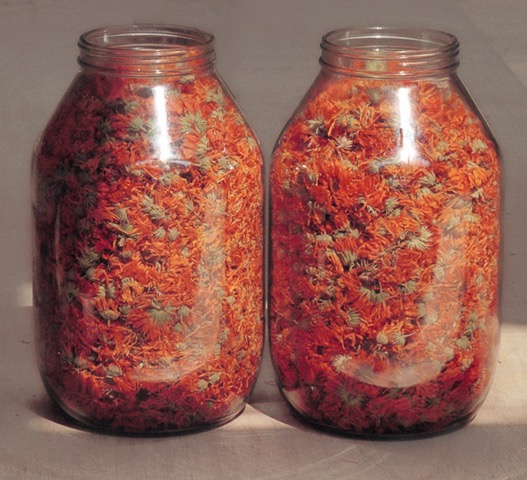
This survey was part of research on medicinal plants carried out to determine which herbs would be most suitable.
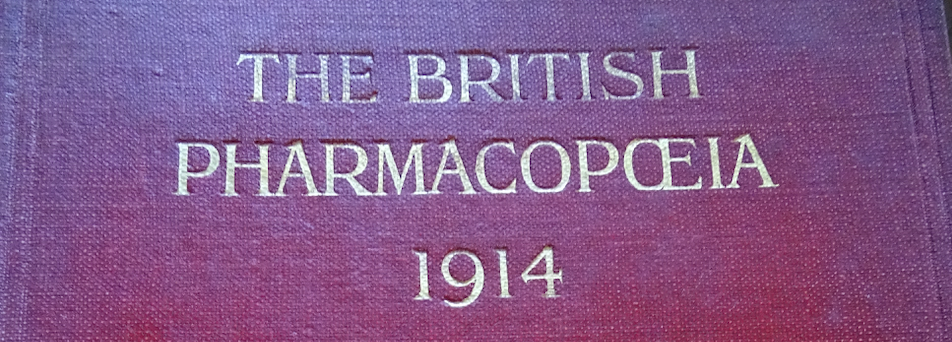
The excellent resources in the Wellcome Foundation Library gave me detailed information on plant cultivars and quickly led me to the British Pharmacopoeias. The publication of the first British Pharmacopoeia in 1864 replaced the earlier ones of London, Edinburgh and Dublin. The last volume of the BP in that format was published in 1993. Incidentally, the publication of the first BP coincided with the establishment of the National Institute of Medical Herbalists also in 1864. This was the beginning of the great ‘divide’ between allopathic medicine and herbalism.
It was at this stage that the research became less focused on my future garden and more of a mission, as I studied the systematic loss of these beautiful and powerful herbs from the BPs and the replacement of herbal formulations (tinctures, infusions, oils, liniments etc) by effective inorganic toxins, synthetic active ingredients and new formulations and applications.
In summary of this research: The number of plants entries and their formulations in BP 1864 is 450. This represents 60% of all entries and includes 135 plant species and 241 common formulations of them. Of these plant species, 48 were native British species or easily cultivated in UK.
At intervals over a period of 126 years, 15 new editions of the British Pharmacopoeia were published – each with additions and deletions of species and formulations. I could thus survey the plant deletions of each subsequent pharmacopoeia. During this period there were 521 deletions of plant species and their many formulations. E.g. Deletions were made for formulations of 2 plant species in 1867 and 9 in the following BP in 1885 – as seen below:
Table 1: An example of botanical deletions [partial table]
| Year of deletion, Vol. & Page no. | Index name | Species name |
| 1867 p. xviii | Catechu Nigrum | Acacia Catechu Willd. Enum. |
| 1867 p. xviii | Cocculus | Anamirta Cocculus Wight & Arnott |
| 1867 p. xviii | Unguentum Cocculus | Anamirta Cocculus Wight & Arnott |
| 1885 vol. I/p.xxii | Areca | Areca Catechu Linn. |
| 1885 vol. I/p.xxii | Liquor Atropiae | Atropa Belladonna Linn. |
| 1885 vol. I/p.xxii | Stramonii Folia | Datura Stramonium Linn. |
| 1885 vol. I/p.xxii | Digitalinum | Digitalis purpurea Linn. |
| 1885 vol. I/p.xxii | Mistura Gentianae | Gentiana lutea Linn. |
| 1885 vol. I/p.xxii | Enema Tabaci | Nicotiana Tabacum Linn. |
| 1885 vol. I/p.xxii | Syrupus Rhamni | Rhamnus catharticus Linn. |
| 1885 vol. I/p.xxii | Dulcamara | Solanum Dulcamara Linn. |
| 1885 vol. I/p.xxii | Infusum Dulcamara | Solanum Dulcamara Linn. |
| 1885 vol. I/p.xxii | Decoctum Ulmi | Ulmus campestris Linn. |
| 1885 vol. I/p.xxii | Ulmi Cortex | Ulmus campestris Linn. |
As seen from the complete table, the peak times for deletions were 1932 and 1948.
BP 1993 Edition 15 contained 52 plant entries. As shown in table 2 below, 23 of them were significant biologically active entries (the others were predominantly pharmaceutical aids like fillers, gums, starches, oils and flavours):
Table 2: List of important plants/extracts in index of BP 1993
| Index name | Species name | Properties/use |
| Acacia* | Acacia Senegal L. | laxative |
| Alexandrian Senna fruit | Cassia senna L. | stimulant laxative |
| Anise & Oil* | Pimpinella anisum L. | carminative & flavour |
| Barbados Aloes* | Aloe barbadensis Miller | laxative |
| Belladonna herb* | Atropa belladonna L | antispasmodic |
| Cardamom & oil* | Elettaria cardamomum Maton | carminative & flavour |
| Cascara | Rhamnus purshianus DC | stimulant laxative |
| Cinchona bark* | Cinchona pubescens Vahl. | bitter |
| Clove* | Syzygium aromaticum (L.) Merrill | carminative & flavour |
| Digitalis leaf* | Digitalis purpurea L. | anti-inflammatory & analgesic |
| Fig* | Ficus carica L. | demulcent |
| Gentian* | Gentiana lutea L. | bitter |
| Hyoscyamus* Leaf | Hyoscyamus niger L. | antispasmodic |
| Ipecacuanha | Cephaelis ipecacuanha (Brot.) A. Rich | expectorant, emetic |
| Ispaghula husk | Plantago ovata Forssk. | anti-diarrhoeal; bulk-forming laxative |
| Linseed* | Linum usitatissimum L. | demulcent |
| Opium* | Papaver somniferum L. | narcotic analgesic |
| Rhatany root* | Krameria triandra Ruiz & Pavon | astringent |
| Rhubarb* | Rheum officinale Baillon | laxative |
| Senega root* | Polygala senega L. | expectorant |
| Squill* | Drimia maritima (L.) Stearn | expectorant |
| Stramonium Leaf* | Datura stramonium L. | antispasmodic |
| Valerian* | Valeriana officinalis L. | sedative |
23 entries * denotes presence in 1864 BP
From then on, whole plant extracts no longer made an important contribution to the British pharmacy and research and emphasis was based on single active ingredients within plants.
This research makes an interesting complement to the blog by Jemma Houghton (3 July 2018) on the history of plants in twentieth century orthodox medical research where single active ingredients are taken to be representative of medicinal herbs. See https://www.herbalhistory.org/home/category/20th-century/
The original research summarises the 1864 plant entries, their formulations and deletions until 1993. See www.apothecaryplants.org.uk [EDIT: This website link has been updated 03 February 2026 using archived website on the WaybackMachine <https://web.archive.org/web/20231128193052/http://www.apothecaryplants.org.uk/research/>