
Since its inception in 2009, there have been a range of experts facilitating the Herbal History Research Network including founding members Susan Francia, Barbara Lewis, Vicki Pitman, Anne Stobart and Nicky Wesson. For more info on how the HHRN was set up, here’s a link to a blog about it.
If you would like to consider joining the committee, please send in your CV and a covering email to herbalhistoryrn@gmail.com.
Current organisers
Julia Nurse, Chair
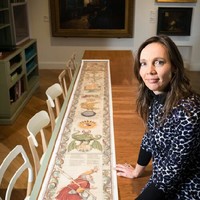
Julia Nurse is a Research Development Lead within the Curatorial and Public Practice team at Wellcome Collection where she currently co-leads on developing an early career researcher and visiting researchers’ programme, research partnerships, collections knowledge and creating new research methodologies around lived experience of health.
Julia is an experienced museum professional and has worked in a curatorial capacity at Wellcome for the last 20 years. She has collaborated on a range of exhibitions, research projects and publications. Her research focuses on the circulation of knowledge around health during the early modern period with a particular focus on domestic recipe books and herbal medicine. Since 2020 she has collaborated with the Early Modern Recipes Online Collective on annual crowd-sourced transcribathons of recipe books held at Wellcome Collection. She previously worked in a curatorial capacity in the Prints and Drawings department at the British Museum. She joined the HHRN in 2019 and has acted as chair since 2023.
Suzi Richer, Secretary
Suzi obtained her PhD in Archaeology from University of York and Université Aix-Marseille in 2010 entitled “From pollen to people: the interaction between people and their environment in the mid-to-high altitudes of the Southern French Alps”, this focussed on how people interacted with the trees and plants of alpine valleys and high-altitude pastures over the last 10,000 years. Suzi has written a range of publications and reports, and maintains a current interest in traditional knowledge systems, the relevance of the past to the present, and local herbal history.
Frances Watkins, Treasurer
Frances completed her PhD at the University of East London, titled ‘Investigation of Antimicrobials from Native British Plants used in 10th Century Anglo-Saxon Wound Healing Formulations’, and continues to publish from her doctoral research. She co-edited Herbal Exchanges, published in celebration of the National Institute of Medical Herbalists’ 150th anniversary of its founding in 1864 and regularly talks on medicinal plants from the hedgerows and herbal preparations that can be made at home. Frances is a professional Medical Herbalist (BSc (Hons) in Herbal Medicine, University of Middlesex), with a practice in Hertfordshire, and is currently researching early medieval herbal formulations.
Francesca Richards, Research Co-ordinator
Francesca completed her PhD entitled ‘Amulet, charm, treasure? The value placed on Mediterranean red coral in the British Isles in the long seventeenth century’ at the Centre for Medieval and Early Modern Studies, University of Kent, funded by a Wellcome Trust Doctoral Studentship, and has lectured on undergraduate history courses. She obtained her undergraduate degree in Anthropology from University College London and an MA in Social Anthropology from the University of Sussex. During an extended break from academia, Francesca qualified as a paediatric nurse at King’s College London and worked at King’s College Hospital. Francesca returned to academia to pursue an MA in Medieval and Early Modern Studies. Her Masters dissertation explored attitudes to exotic herbal medicines among the Kentish gentry in the seventeenth and eighteenth centuries. Francesca’s doctoral research explored the significance of Mediterranean red coral to British beliefs about health and wellbeing in the period in the early modern period, drawing on the history of medicine, the history of art, literature studies and material approaches. Francesca also organised a symposium and exhibition on the theme of ‘Migrating Materia Medica’ at the University of Kent in 2023. Francesca has recently published open access articles in peer-reviewed journals, History of the Family (Taylor & Francis) and the Social History of Medicine (Oxford University Press) and a chapter in Galen’s Remedies in the Early Modern Period (Springer Palgrave, 2026). https://www.linkedin.com/in/francesca-elizabeth-richards/
Victoria Pitman, Officer

A clinically qualified Western Herbal Medicine practitioner, Vicki gained her M.Phil. in Complementary Health Studies at Exeter University. Her dissertation was subsequently published as The Nature of the Whole, Holism in Ancient Greek and Indian Medicine ( Motilal Barnasidass, 2006). This research enabled her to combine her deep interests in both history and herbal medicine and traditional healing. She also holds higher degrees in education: an MA-T from Converse College, South Carolina, and City & Guilds Level 4 Subject Specialist Certificate in Adult Literacy, Wiltshire College, and has been a teacher and trainer in the field of Complementary Therapies and English. She is also qualified in Ayurveda, Reflexology, Aromatherapy, and Massage. In 1999 she co-organised with Dr. Dominik Wujastyk, a conference at the Wellcome Institute, on Precept and Practice in Traditional Medical Systems. Vicki has authored books on Herbal Medicine, Reflexology, Aromatherapy; several articles in international journals, and chapters in Reshaping Herbal Medicine, Knowledge Education and Professional Culture (ed. Catherine O’Sullivan, Elsevier, 2005) and Critical Approaches to the History of Western Herbal Medicine From Classical Antiquity to the Early Modern Period (ed. Susan Francia and Anne Stobart, Bloomsbury, 2014).
Lucy Padina, Blog Editor
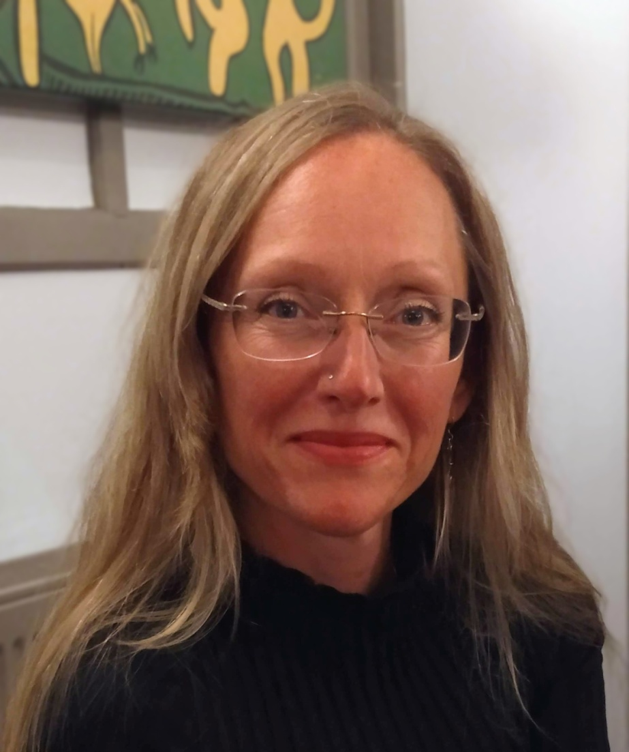
Lucy is a practicing medical herbalist on the Isle of Wight, having trained with Heartwood Education and is a qualified practitioner member of the National Institute of Medical Herbalists (NIMH). Prior to training in medical herbalism, Lucy was a clinical social worker and subsequently, a psychologist. She has written for health-focused websites and spent several years copy editing and proof-reading for a young person’s charity. With several years training in psychotherapeutic approaches, Lucy retains a keen interest in mental health and wellbeing alongside her herbal practice.
Lucy is also a keen historian, with a particular interest in social history. She hosts talks on the history of herbal medicine, with a particular focus on the Roman Empire, approaches to health and wellbeing and the medicinal use of herbs in antiquity.
Kim Walker, Website Manager

Kim Walker trained as Medical Herbalist (BSc (Hons); MSc) at Westminster University in 2014. She went on to research, and completed a PhD in the History of Medicine in 2023 the fever tree (Cinchona spp.) and quinine. She currently works as an associate researcher at Royal Holloway, University of London and the Royal Botanic Gardens, Kew studying coca (Erythroxylum spp.) and cocaine. She is the Author of the award-winning Just the Tonic: A natural and social history of tonic water (2019, Kew), The Handmade Apothecary (2017, Kyle) and The Herbal Remedy Handbook (2019, Kyle). Kim is currently taking a sabbatical from HHRN for 2026.
- www.kimwalkerresearch.co.uk
- https://www.kew.org/science/our-science/people/kim-walker
- www.handmadeapothecary.co.uk
Past Members
Anne Stobart, Founder & Research Officer
Anne completed her training as a professional medical herbalist with the School of Herbal Medicine in 1993, and retired from clinical practice in Crediton, Devon, UK in 2018. Anne was Director of Programmes for Complementary Health Sciences, at Middlesex University, where she completed her PhD in the history of medicine. She is an honorary research fellow of the University of Exeter. Anne co-edited Critical Approaches to the History of Western Herbal Medicine (Bloomsbury, 2014) and has published some of her historical research in Household Medicine in Seventeenth-Century England (Bloomsbury, 2016). Anne also has research interests in permaculture design and the sustainable cultivation and harvest of medicinal plants. She cofounded the Holt Wood project in Devon on medicinal trees and shrubs. Currently she is developing the Medicinal Forest Garden Trust and online courses related to permaculture design with medicinal trees.
Barbara Lewis, Secretary
Barbara worked as a nurse in the NHS before training as a botanist with the Kent Wildlife Trust having gained a degree in biology and ecology. During this time Barbara decided to combine both interests and studied as a medical herbalist at the College of Practitioners of Phytotherapy and the University of Westminster. Graduating in 2001 Barbara worked as a herbalist in Bristol and Somerset where she continues to practice. She was also involved with the restoration of Dean William Turner’s garden in Wells where she subsequently gave walks and talks on medicinal plants.
Marion Mackonochie, Blog Editor
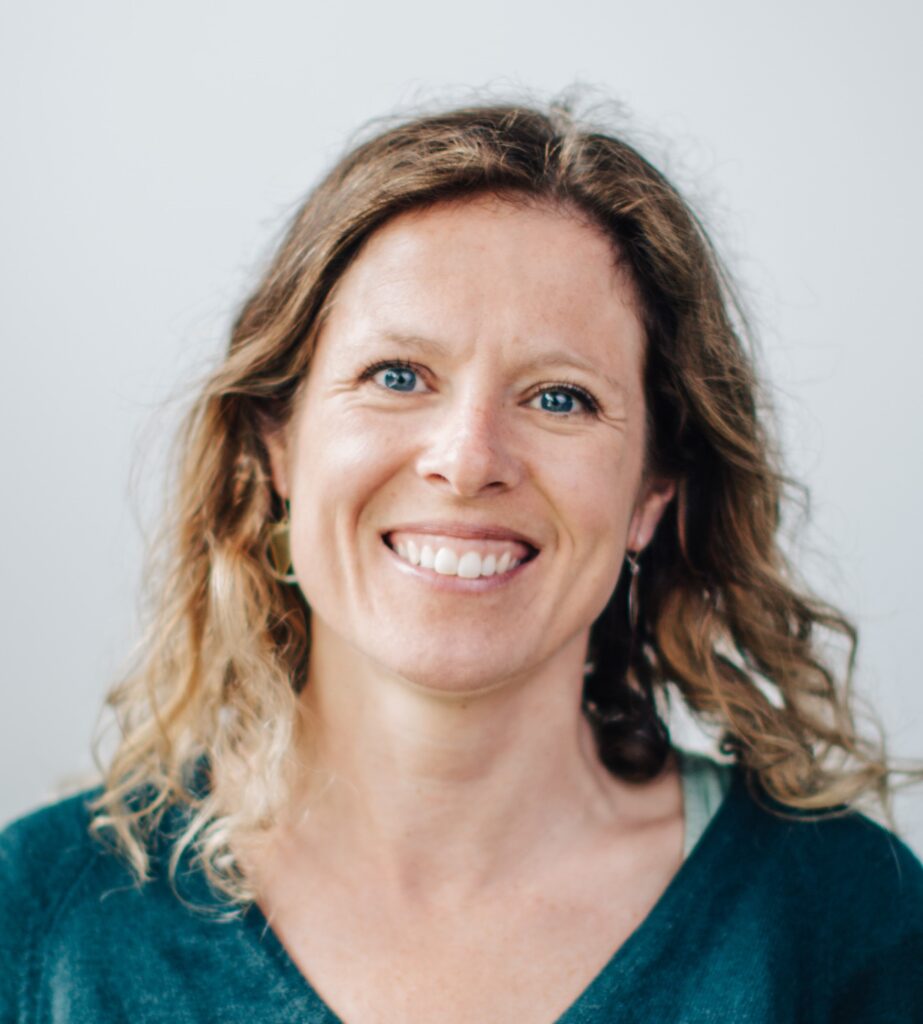
Marion is a medical herbalist in Brighton and Senior Herbal Specialist at Pukka Herbs. After completing a degree in pharmacology and physiology and a short time working in science publishing, she trained to be a herbalist at Middlesex University, then continued studying with a Masters degree in medicinal natural products and phytochemistry at UCL.
Her Masters final project involved exploring materia medica chests from the 19th century and what they can tell us about the historical use of medicinal plants by different medical professionals. An interest in the intersection between herbal traditions, society and science has led her to examine the benefits of research for herbal practice as an associate editor for the Journal of Herbal Medicine and a director of the Herbal Alliance.
Christina Stapley
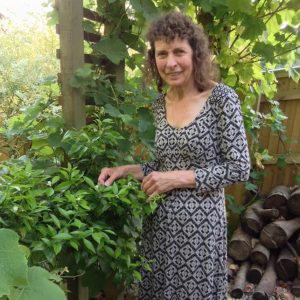
Christina has a B.Sc (Hons) in Phytotherapy. Having researched herbal history for more than 40 years, she has taken over 120 different practical workshops at Museum venues since 1995. Her historical workshops at the Weald and Downland Living Museum have covered pre-Roman to Victorian periods. In 2010 Christina tutored a postgraduate course, Stillroom to Dispensary for NIMH in Reading. This was a practical course making historical recipes followed by discussion of their suitability for use in modern Practice. In 2011 she tutored a week of ‘Settler’ herb workshops at Plimoth Plantation Museum near Boston, Massachusetts. She has written Herbwise Naturally, Herbcraft Naturally and
Herb Sufficient on growing and using herbs and edited The Receipt Book of Lady Anne Blencowe. 1694. Now retired as a medical herbalist, Christina teaches the History of Western Herbal Medicine, Pharmacognosy and Materia Medica at The School of Herbal Medicine, Somerset. Her recent publications are The Tree Dispensary, The Uses, History and Herbalism of Native European Trees and the companion volume, The Tree Dispensary, The Uses, History and Herbalism of Exotic Trees.
Alision Denham, Secretary

Alison qualified as a herbal practitioner in 1984 and is based in Leeds, Yorkshire, UK. She is a Fellow of the National Institute of Medical Herbalists, and has retired as Senior Lecturer in Herbal Medicine and Integrated Healthcare at the University of Central Lancashire. Her interest in history was reawakened through working on a joint publication with her colleagues, on the history of western herbal medicine. Alison’s main academic interests are in risk management in the professional practice of herbal medicine and in the publications of John Skelton (1805-1880) who was a prominent Chartist and later a leading herbal practitioner. She is also a keen gardener, and makes fresh herbal preparations.
Julie Bruton-Seal, Chair

Julie is a practising herbalist, iridologist and cranio-sacral therapist working in rural Norfolk. A Fellow of the Association of Master Herbalists (AMH), she is currently Chair of the Herbal History Research Network. She is also an artist, jeweller, photographer and graphic designer.
She has co-authored five books about herbal medicine with her husband, Matthew Seal: Wayside Medicine: Forgotten Plants and How to Use Them (May 2017); The Herbalist’s Bible: John Parkinson’s Lost Classic Rediscovered (2014); Make Your Own Aphrodisiacs (2012); Kitchen Medicine (2010); and Hedgerow Medicine (2008). They are currently researching pre-historic uses of plants. They are members of The Association of Foragers and teach courses and workshops about foraging and herbal medicine making.